
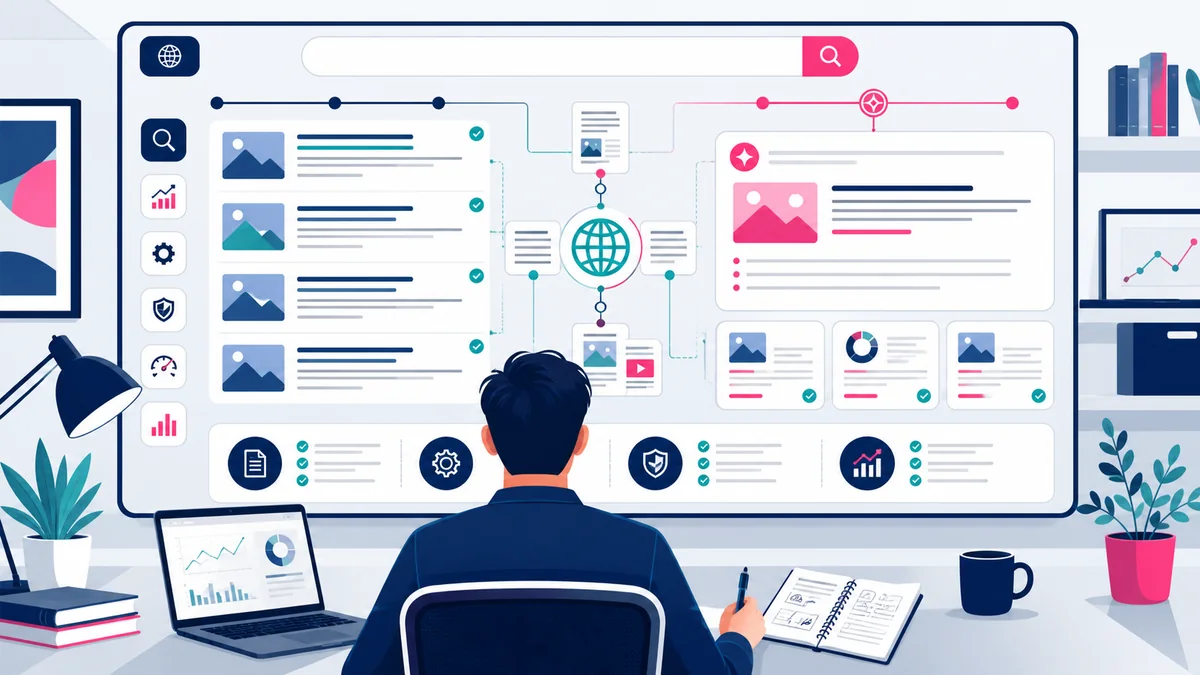
The short answer and the operating change
- AI search changes how answers are assembled, but it does not remove the need for discoverable web sources.
- Technical quality, useful content, links, brand trust, and demand still influence visibility.
- Success now includes citations, mentions, assisted discovery, and conversions as well as rankings.
- Teams should adapt measurement and content formats without abandoning SEO fundamentals.
SEO is not dead. People still need products, services, explanations, comparisons, and trustworthy sources; the route to those answers now runs through classic results, AI-generated summaries, video, communities, marketplaces, and brand recommendations. The useful question is no longer whether SEO survives. It is which parts of the operating model still create demand and which habits have become expensive noise.
It is changing because AI-powered search features are altering how people discover information. Google AI Overviews, AI Mode, ChatGPT search, Perplexity, Bing, and other tools make search more conversational and answer-focused. Users no longer only type short keywords and click through a fixed list of results.
They ask full questions. They compare options. They expect summaries. They ask follow-up questions. They want direct answers and sources. That changes the job of SEO.
The goal is no longer only:
“Rank higher for this keyword.”
The new goal is:
“Be discoverable, trusted, cited, and useful wherever people search.” That still includes Google. But it also includes AI assistants, social search, community platforms, video search, product platforms, and brand mentions across the web. So no, SEO is not dead.
But SEO is becoming broader, more brand-driven, more content-quality-driven, and more authority-driven. The easy traffic era is fading. The useful authority era is here.
Why People Think SEO Is Dying
The anxiety is understandable, but the evidence points to a transition rather than an extinction event. In a June 2026 Semrush survey of 481 marketers, business owners, and SEO professionals, 77% described AI search as an extension of SEO. Only 22% said their SEO and AI-search execution was fully integrated. That is an operating gap: strategy has moved faster than ownership, workflow, and measurement.
The “SEO is dead” conversation is not new. People have said SEO was dead many times before.
They said it when:
Google introduced major algorithm updates. Featured snippets appeared. Voice search became popular. Social media grew. Zero-click searches increased. Paid ads took more space. mass-produced content exploded. AI Overviews entered search results. ChatGPT search started answering with sources.
SEO did not die during those shifts. But it did change. This time, the fear feels stronger because AI search can answer questions directly. For some queries, users may not need to click a website.
For example, if someone asks:
“What is anchor text?” An AI answer can explain it quickly. If the answer is enough, the user may not click any source. That worries publishers, affiliates, bloggers, and SEO teams that depend on informational traffic. The concern is real. AI search can reduce clicks for some queries.
But reduced clicks do not mean SEO is dead. It means SEO success can no longer be measured only by raw traffic. Visibility, citations, brand mentions, assisted conversions, and high-intent clicks matter more now.
What AI Search Actually Changes
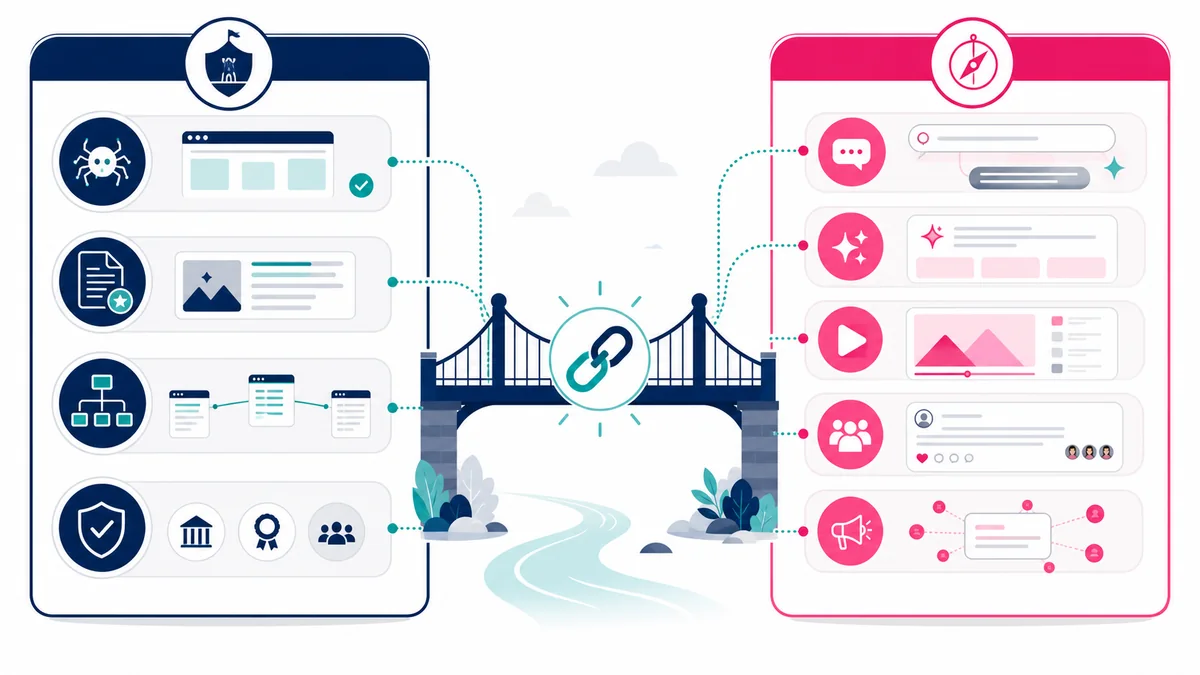
AI search changes several important parts of SEO. The table below separates the new discovery experience from the foundations that still determine whether a source is useful and trustworthy.
| Area | What changes | What remains essential | Practical response |
|---|---|---|---|
| Queries | People ask longer, conversational, multi-part questions. | Intent and relevance still determine whether a page is useful. | Map real questions and answer the decision behind each query. |
| Results | Generated summaries can appear before or beside classic links. | Systems still need crawlable pages and reliable supporting evidence. | Make key passages direct, verifiable, and worth opening for deeper detail. |
| Visibility | Citations, mentions, and source cards add another discovery layer. | Rankings, brand recognition, authority, and links still matter. | Track organic positions and AI citation presence together. |
| Content value | Commodity explanations are easier to summarize without a click. | Original evidence, expert judgment, examples, and tools stay useful. | Create something a short summary cannot fully replace. |
| Measurement | Raw traffic alone explains less of the customer journey. | Qualified visits, leads, revenue, and retention remain the outcome. | Connect visibility metrics with conversion and pipeline data. |
1. Search Becomes More Conversational
Users are asking longer, more specific questions.
Instead of:
- “guest posting”
They may ask:
“How can a SaaS company use guest posting safely without getting low-quality backlinks?”
Instead of:
- “link building price”
They may ask:
“How much should I pay for a guest post on a site with real traffic in 2026?”
Instead of:
- “AI SEO”
They may ask:
- “How do I get my brand cited by AI search systems?”
This changes keyword research. Marketers need to understand full questions, not only short keywords.
That means content should answer:
- What is it?
- Why does it matter?
- How does it work?
- What should I avoid?
- How do I compare options?
- What should I do next?
SEO is becoming more intent-driven and question-driven.
2. Search Results Become More Answer-Focused
Traditional search results still exist. But AI search adds summaries before, beside, or within those results. That means users may get an answer before clicking. For basic informational queries, this can reduce traffic. For deeper queries, it can push users toward sources that provide more detail, proof, tools, examples, or products.
So content needs to go beyond simple definitions. If your page only answers “what is X,” AI may summarize it easily. If your page includes original data, examples, templates, case studies, expert commentary, and practical next steps, users have more reason to click. Simple answers are easier to replace.
Useful resources are harder to replace.
3. Citations Become a New Visibility Layer
In AI search, being cited can matter almost as much as ranking. A page may appear as a source in an AI answer. A brand may be mentioned in a comparison. A report may be referenced for a statistic. A guide may be linked as supporting evidence.
This creates a new question for SEO teams:
“Are we appearing inside the answer?”
That means you should track:
- AI citations
- Brand mentions
- Source links
- Competitor mentions
- AI referral traffic
- Branded search growth
- Query visibility across AI tools
Rank tracking is still useful. But it is not enough.
4. Generic Content Loses Value
Generic SEO content has a problem. AI can summarize generic content very easily. If your article says the same thing as everyone else, users may not need to visit it. For example, an article titled “What Is SEO?” that only repeats basic definitions may struggle to earn clicks.
But a page that includes:
- Original research
- Industry examples
- Step-by-step frameworks
- Expert insights
- Comparison tables
- Updated screenshots
- Practical templates
- Real case studies
is more useful. AI search makes “average content” less valuable. That is not bad news for good marketers. It is bad news for content farms.
5. Brand Authority Matters More
In the AI search era, users and systems need to know which sources are trustworthy. That means brand authority matters. A known brand with clear expertise, strong mentions, useful content, and trusted backlinks has an advantage. This does not mean small brands cannot compete. They can.
But they need to be more specific, more useful, and more credible.
Strong brand signals include:
- Clear positioning
- Helpful content
- Real authors
- Expert opinions
- Original research
- Backlinks
- Brand mentions
- Reviews
- Case studies
- Social proof
- Product documentation
- Consistent entity information
SEO is no longer just about pages. It is about the authority of the brand behind the pages.
6. Traffic Quality Matters More Than Traffic Quantity
AI search may reduce clicks for some informational queries. But the users who do click may be more qualified.
- Why?
Because they often click when they need:
- Deeper detail
- Source verification
- Original data
- Product information
- Examples
- Templates
- Tools
- Expert guidance
- Pricing
- Comparison help
- A solution provider
This means marketers should track more than sessions.
Track:
- Demo requests
- Signups
- Leads
- Assisted conversions
- Referral quality
- Newsletter subscribers
- Branded searches
- Returning users
- Sales conversations
- Pipeline influence
A smaller number of better visitors can be more valuable than a large number of low-intent visitors. The SEO dashboard needs to evolve.
What AI Search Does Not Change
AI search changes a lot. But it does not change everything. The fundamentals still matter.
1. People Still Search
People still need answers. They still research problems. They still compare products. They still look for services. They still check reviews. They still want trusted sources. Search behavior is changing, but demand for information is not disappearing. If anything, AI search may increase the number of questions people ask because it makes searching easier and more conversational.
That creates more opportunities for brands that answer well.
2. Content Still Matters
AI needs content to summarize, cite, and retrieve. If brands stop publishing useful content, AI systems have less useful material to work with.
Your content still matters because it can:
- Rank in search results
- Get cited in AI answers
- Educate buyers
- Build trust
- Support sales
- Earn links
- Generate leads
- Create brand authority
- Help existing customers
- Support product discovery
The format may change. The strategy may change. But useful content is not going away.
3. Technical SEO Still Matters
If your content cannot be crawled, indexed, rendered, or understood, it will struggle in both traditional and AI search.
Technical SEO still includes:
- Crawlability
- Indexability
- Site architecture
- Mobile usability
- Page speed
- Structured data where appropriate
- Canonicals
- Sitemaps
- Clean URLs
- Search visibility controls
- Snippet eligibility
AI search does not remove the need for technical SEO. It makes discoverability even more important.
4. Search Intent Still Matters
If your page does not match what users want, it will struggle. Search intent still matters in AI search because AI-generated answers try to satisfy user needs.
Before creating content, ask:
- Is the user learning?
- Comparing?
- Buying?
- Troubleshooting?
- Looking for examples?
- Looking for a local provider?
- Looking for a tool?
- Looking for a definition?
- Looking for a checklist?
Content that misses intent will not perform well just because it mentions AI or uses schema. Intent is still the heart of SEO.
5. Links Still Matter
Backlinks still help with discovery, authority, trust, and ranking. They also support brand visibility across the web. In AI search, links and mentions can help show that your brand or content is referenced by others. But link quality matters more than ever. Low-quality guest posts, irrelevant backlinks, spammy directories, and link farms are not a future-proof strategy.
Useful links come from:
- Relevant publishers
- Industry blogs
- Research citations
- Digital PR
- Guest posts with real value
- Partner pages
- Resource pages
- Product roundups
- Expert quotes
- Brand mentions
AI search does not kill link building. It kills lazy link building.
SEO vs GEO vs AEO: Do the Labels Matter?
You may see new terms like:
- GEO: Generative Engine Optimization
- AEO: AI search Optimization
- LLMO: Large Language Model Optimization
- AI SEO
- Search everywhere optimization
These labels can be useful if they help explain new search behavior. But do not let labels distract you.
For marketers, the practical goal is the same:
Make your brand easier to find, understand, trust, cite, and choose. Traditional SEO focuses on search engines. GEO focuses on generative answers. AEO focuses on AI search systems. Brand visibility focuses on being found across platforms. The best strategy combines them.
You still need:
- Technical SEO
- Helpful content
- Search intent
- Strong information architecture
- category relevance
- Backlinks
- Brand mentions
- Trust signals
- Measurement
The name matters less than the work. Do not buy into AI search hacks that ignore SEO fundamentals. If someone says “SEO is dead, now you only need GEO,” be careful. AI search is still built on discoverable, useful, trusted information. That is SEO’s territory.
How Search Behavior Is Changing
Search behavior is becoming more fragmented.
Users may discover your brand through:
- Google Search
- AI Overviews
- AI Mode
- ChatGPT search
- Perplexity
- Bing
- YouTube
- TikTok
- Product review sites
- App marketplaces
- Communities
- Newsletters
- Podcasts
- Comparison pages
- Industry reports
This means SEO can no longer live in a silo.
Modern SEO overlaps with:
- Content marketing
- Digital PR
- Brand marketing
- Product marketing
- Social media
- Community building
- Conversion optimization
- Data storytelling
- Thought leadership
- Technical website management
For example, a SaaS buyer may:
Ask ChatGPT for tool recommendations. Search Google for alternatives. Read Reddit discussions. Compare products on review sites. Watch YouTube demos. Visit pricing pages. Read case studies. Ask AI for a final comparison. SEO touches many of those steps. But not always through a classic blog ranking.
The new SEO mindset is broader:
Be present where search-like behavior happens.
How AI Affects Organic Traffic
AI search can affect organic traffic in different ways.
It May Reduce Clicks for Simple Queries
If users get a complete answer directly in the search result, they may not click. This affects basic informational content the most.
Examples:
- Definitions
- Simple facts
- Basic how-to answers
- Quick explanations
- Commodity listicles
It May Increase Visibility for Strong Sources
If your content is cited or linked in an AI answer, your brand may gain visibility even if the user does not click immediately. This can influence later searches and buying decisions.
It May Send More Qualified Visitors
Users who click after reading an AI summary may be looking for deeper information. That traffic can be more valuable.
It May Shift Value Toward Brand Demand
If search clicks decline, brand recall becomes more important. People may search your brand after seeing it mentioned in AI answers, communities, or comparison content.
It May Punish Content That Exists Only for Traffic
If a page has no unique value beyond answering a basic question, AI can replace much of its usefulness. That does not mean all informational content is useless. It means informational content must be better, deeper, more original, or more connected to business value.
Watch: how SEO strategy is adapting to the AI era
This Ahrefs discussion is a useful companion because it treats AI visibility as an extension of search strategy: understand demand, publish genuinely useful resources, build authority, and measure more than a single ranking.
Why Helpful Content Still Matters
Helpful content is still the center of SEO.
- But helpful now means more than “long enough to rank.”
Helpful content should:
- Answer the question clearly
- Match user intent
- Add original value
- Include examples
- Show expertise
- Be easy to read
- Be accurate
- Be updated
- Provide next steps
- Link to useful resources
- Support real decisions
- Avoid filler
For example, a helpful article about link building pricing should not only say:
“Prices vary.”
It should explain:
- Typical price ranges
- What affects cost
- Guest post vs link insertion pricing
- Agency vs marketplace pricing
- Cheap vs quality links
- Budget planning
- Red flags
- Examples
- Before you send the request
That kind of content is harder to replace with a short AI answer. It gives users depth. AI search increases the value of content that goes beyond the obvious.
Why Backlinks and Brand Mentions Still Matter
Backlinks and brand mentions are becoming more connected. Relevant editorial links help search systems and people discover useful pages, while credible mentions provide context about what a brand is known for. Review the editorial standards before planning placements, and use the guest posting and blogger outreach service when subject relevance and genuine editorial fit are the priority.
When trusted sites cite useful research, tools, or guides, they can strengthen authority and referral discovery. Mentions in comparison pages, expert roundups, podcasts, and industry newsletters can also improve recognition. The case studies show how to document the work and outcomes without relying on vague claims.
- The future of SEO is not only “build links.”
It is:
Build a web presence that proves your brand belongs in the conversation.
Good off-page SEO now includes:
- Backlinks
- Brand mentions
- Digital PR
- Expert quotes
- Original research citations
- Product reviews
- Community discussions
- Partner mentions
- Podcasts
- Newsletters
- Tool roundups
- Case studies
Links still matter. But unlinked mentions also matter for brand visibility. Together, they help your brand become recognizable.
What Marketers Should Stop Doing
AI search makes weak SEO tactics less useful. Here is what marketers should stop doing.
Stop Publishing Generic Content
Do not publish articles that repeat what every competitor already said. Add examples, data, opinions, tools, templates, or practical experience.
Stop Chasing Keywords Without Intent
A keyword is not a strategy. Understand what the user needs and what format they expect.
Stop Measuring Only Traffic
Traffic matters, but it is not the only metric. Track leads, conversions, mentions, citations, branded search, and assisted revenue.
Stop Buying Random Backlinks
Low-quality backlinks are not a future-proof strategy. Focus on relevant, contextual, trustworthy placements.
Stop Ignoring Brand
SEO without brand is weaker in AI search. Build authority beyond your own website.
Stop Creating Thin AI Content at Scale
Using AI to publish hundreds of low-value articles is not a strong SEO strategy. Use AI to support quality, not replace expertise.
Stop Treating SEO as Only Google Rankings
Search happens across platforms now. Your strategy should include AI tools, communities, video, reviews, and comparison content.
What Marketers Should Do Instead
Here is the better path.
1. Build Topic Authority
Create connected content clusters around your core topics. Do not publish isolated articles.
2. Create Source-Worthy Assets
Publish content that others can cite:
- Studies
- Reports
- Templates
- Calculators
- Checklists
- Benchmarks
- Original data
- Expert guides
3. Strengthen Technical SEO
Make sure important URLs are crawlable, indexable, fast, and internally linked.
4. Optimize for Questions
Answer real user questions clearly. Use FAQs, examples, and follow-up sections.
5. Build Brand Mentions
Get your brand referenced across relevant websites, podcasts, newsletters, and communities.
6. Earn Better Backlinks
Prioritize relevance, quality, traffic, and context.
7. Refresh Content Often
Update important URLs when search behavior, tools, pricing, or policies change.
8. Track AI Visibility
Monitor AI citations, brand mentions, source links, and competitor visibility.
9. Connect SEO to Revenue
Measure business impact, not only rankings.
10. Use AI Carefully
Use AI for research, outlines, editing, repurposing, and analysis. Do not use it to mass-produce thin content.

A Modern SEO Playbook for AI Search
| Workflow | Narrow approach | Modern approach |
|---|---|---|
| Research | Choose one keyword and estimate search volume. | Study intent, follow-up questions, customer language, and discovery surfaces. |
| Content | Publish a generic article built around heading variations. | Create a complete resource with evidence, examples, expert context, and a clear next step. |
| Authority | Count links without judging why the source matters. | Earn relevant editorial links, credible mentions, citations, reviews, and expert association. |
| Distribution | Wait for Google rankings to create every visit. | Support discovery through search, AI results, communities, video, newsletters, and industry media. |
| Reporting | Report position and traffic changes only. | Connect rankings, citations, branded demand, qualified visits, leads, and revenue. |
The new SEO playbook is not complicated. But it is more demanding.
- Old SEO Playbook
- Pick keyword
- Write article
- Add keyword to headings
- Build backlinks
- Wait for rankings
- Measure traffic
- New SEO Playbook
- Understand user intent
- Map conversational questions
- Build topic clusters
- Create original source-worthy content
- Add expert insight
- Structure content clearly
- Strengthen technical SEO
- Earn backlinks and brand mentions
- Track AI citations and rankings
- Refresh content regularly
- Measure business impact
This is better SEO. Not dead SEO. The marketers who win will be the ones who treat SEO as a visibility system, not a traffic trick.
| Layer | Track | Question it answers |
|---|---|---|
| Organic discovery | Rankings, impressions, clicks, CTR, and landing-page engagement | Can searchers find and use the page through classic results? |
| AI visibility | Prompt set, cited URL, brand mention, competing sources, and referral sessions | Is the brand or page present when an AI system assembles an answer? |
| Authority | Relevant links, editorial mentions, research citations, reviews, and expert references | Is third-party evidence strengthening the brand’s topic association? |
| Demand | Branded searches, returning visitors, direct traffic, newsletter growth, and assisted visits | Is visibility creating recognition beyond one click? |
| Business value | Qualified leads, signups, sales conversations, assisted conversions, and revenue | Does the search program contribute to outcomes the business values? |
SEO Is Not Dead: Strategy Checklist
Use this checklist to update your SEO strategy for AI search.
Strategy Checklist
- Are we tracking more than rankings?
- Do we know which AI tools mention our brand?
- Are we monitoring competitor citations?
- Are SEO goals connected to revenue?
- Are we building brand demand?
Content Checklist
- Does our content answer real questions?
- Is it better than generic AI summaries?
- Does it include examples or data?
- Does it show expertise?
- Is it structured clearly?
- Is it refreshed regularly?
Authority Checklist
- Are we earning relevant backlinks?
- Are we building brand mentions?
- Are we publishing original research?
- Are experts associated with our content?
- Are other websites citing us?
Technical Checklist
- Are key pages crawlable?
- Are they indexable?
- Are snippets allowed where needed?
- Are internal links strong?
- Is structured data accurate?
- Is the site easy to navigate?
Measurement Checklist
- Are we tracking organic traffic quality?
- Are we tracking conversions?
- Are we tracking branded search?
- Are we tracking AI referrals?
- Are we tracking citations and mentions?
- Are we reviewing assisted revenue?
If your SEO program only tracks keyword rankings and blog traffic, it is time to evolve.
The EduGuestPost Integrated Search Visibility Scorecard
Use this scorecard during a monthly SEO campaign review. It keeps the team from replacing one narrow ranking report with an equally narrow AI-citation report. Every layer must connect to an owner, evidence, and a business decision.
| Layer | Evidence to review | Decision it supports |
|---|---|---|
| Customer demand | Search queries, sales questions, support themes, communities, and competitor comparisons. | Which problems deserve content and which do not? |
| Classic discovery | Indexing, rankings, impressions, clicks, result features, and landing-page behavior. | Can searchers find and use the page? |
| Source quality | Intent fit, direct answer, original utility, author, evidence, freshness, and readability. | Does the page deserve to rank or support an answer? |
| Authority | Relevant editorial links, expert mentions, citations, reviews, and brand-topic association. | Who else validates the business on this subject? |
| AI visibility | Stable prompt set, citations, mentions, source competitors, accuracy, and volatility. | How is the brand represented in generated answers? |
| Customer action | Qualified visits, assisted conversions, leads, sales conversations, retention, and revenue. | Which visibility produces useful demand? |
| Next decision | Keep, improve, consolidate, create, distribute, correct, or stop, with owner and deadline. | What will change before the next review? |
For public quality standards, review the editorial standards and use the readability calculator as a diagnostic rather than a substitute for editing. The case studies show how to document work and outcomes with context.
What to Prioritize Next
SEO is not dead. But SEO has changed. AI search is making basic answers easier to get without clicking. That means generic content, weak backlinks, and traffic-only strategies are losing value.
But the core job of SEO is still important:
Help the right people find the right information at the right time. What changes is where and how that discovery happens. Modern SEO now includes rankings, AI citations, brand mentions, source visibility, referral quality, and trust across the web. The winners will not be the brands that publish the most content.
They will be the brands that publish the most useful, credible, original, and discoverable content. They will build authority. They will earn mentions. They will answer better questions. They will connect SEO to business outcomes. So no, SEO is not dead. Lazy SEO is dead. Useful SEO is becoming more important.
Build authority around pages that solve a real customer problem. Review relevant opportunities in the publisher marketplace, use the SEO tools for campaign checks, or send a detailed brief through the campaign order form.
FAQs About Whether SEO Is Dead
Is SEO dead in 2026?
No. SEO is not dead in 2026. But SEO is changing because AI search, AI Overviews, and AI search systems are changing how users discover information.
Will AI replace SEO?
AI will not fully replace SEO. It will change SEO by making content quality, brand authority, citations, technical visibility, and source-worthiness more important.
Does Google still use SEO fundamentals for AI search?
Yes. Technical SEO, helpful content, crawlability, indexability, page experience, links, and authority signals still matter for visibility in Google Search and AI-powered search features.
Will AI search reduce organic traffic?
For some informational queries, yes. AI search can reduce clicks when users get answers directly. But it can also create brand visibility, citations, and higher-intent clicks.
What kind of SEO content will survive AI search?
Content with original data, expert insight, examples, tools, templates, comparisons, case studies, and practical guidance is more likely to stay valuable.
Are backlinks still important?
Yes. Backlinks still support discovery, authority, and trust. In AI search, brand mentions and citations across the web are also becoming more important.
Should marketers focus on GEO instead of SEO?
Marketers should not abandon SEO for GEO. GEO builds on SEO. The best approach is to optimize for search visibility across traditional results and AI-generated answers.
What SEO tactics are dying?
Generic content, keyword stuffing, random backlink buying, thin AI-generated articles, and traffic-only reporting are becoming less effective.
How should SEO teams measure success now?
SEO teams should track rankings, clicks, conversions, AI citations, brand mentions, referral quality, branded search, assisted conversions, and revenue impact.
What is the future of SEO?
The future of SEO is broader search visibility. It includes helpful content, technical SEO, AI search citations, brand authority, backlinks, mentions, and measurable business outcomes.
Research Behind This SEO and AI Search Guide
These current studies and practitioner resources informed the strategy, workflow, content-quality, authority, and measurement sections.
- Ahrefs: real data behind the recurring “SEO is dead” claim
- Semrush 2026 study: the gap between AI-search strategy and integrated execution
- Semrush 2026 study: human editorial input and search performance
- Semrush operating example: SEO and AI visibility moving together
- Ahrefs: measuring AI impact on organic visibility and traffic
- Neil Patel 2026: why SEO is changing rather than disappearing
- Ahrefs video: ranking in Google during the AI-search era
Strengthen Pages That Deserve Wider Visibility
Review how EduGuestPost handles publisher selection and delivery before requesting opportunities.
Share your target pages, topics, markets, and publisher standards. We will review relevant opportunities and prepare a campaign shortlist built around topical fit, editorial quality, natural placement, and clear reporting.