
Local Business Authority and Directory Listings
Local Citation Building Services for Stronger Local Authority
Create one approved business profile, use it across suitable country and industry directories, address inaccurate or duplicate listings, and receive a report that shows the real status of every action.
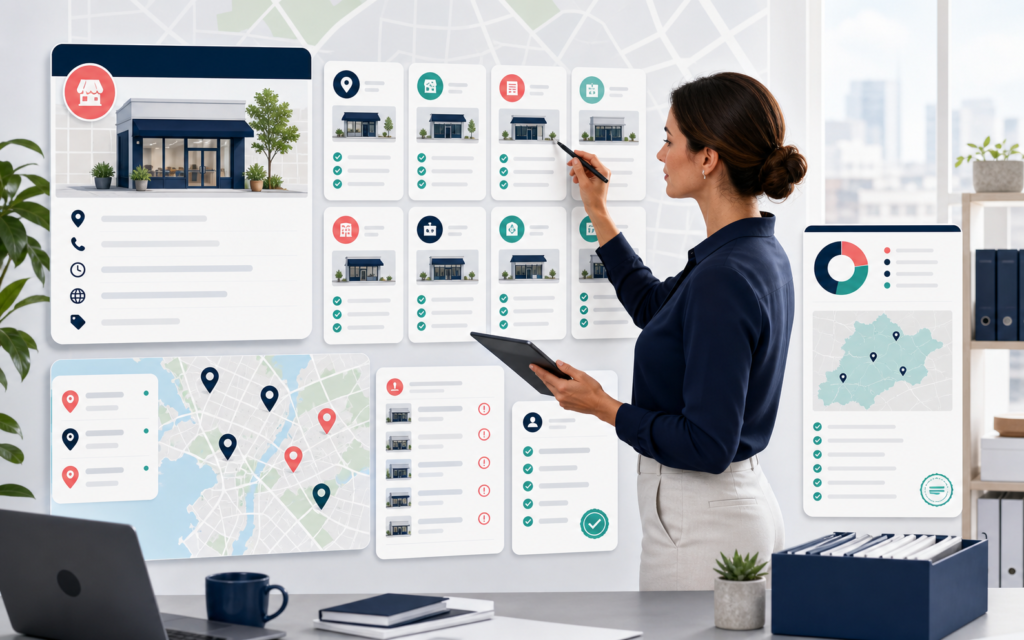
Accurate business data before submission volume
Make the business easier to verify across the web
A local citation is a public business reference on a directory, map, business database, association, professional platform, or regional website. The core details usually include the business name, address or service area, phone number, website, and category. Richer listings may also show hours, descriptions, images, founding year, social profiles, and location-specific information.
The practical value starts with accuracy. A customer should not find an old phone number on one directory, a previous address on another, and three profiles that appear to describe the same branch. EduGuestPost organizes the approved source profile first, then uses it to plan new citations, corrections, duplicate reviews, verification tasks, and reporting.
Build new citations
Choose suitable general, regional, city, country, professional, and industry directories after checking that the business is eligible and the platform accepts its address or service-area model.
Audit and clean existing listings
Review old names, addresses, phone numbers, websites, categories, duplicate profiles, valid branches, ownership access, and verification requirements before deciding what can be corrected.
The source of truth
Approve the master business profile first
Small differences in punctuation or abbreviations are not automatically harmful, but conflicting customer-facing information is. Before directory work begins, the business needs a clear decision on the name customers see, the publishable address or service area, the primary phone, the canonical website or location page, and the categories that accurately describe the operation.
We also record historical names, previous addresses, disconnected phone numbers, old domains, and closed locations. Those details help identify profiles that belong to the business but should not be copied into new submissions.
How Google describes local results
Citations can support accurate data; they cannot buy a ranking
Google says local results are mainly based on relevance, distance, and prominence. It also says there is no way to request or pay for a better local ranking. Complete and accurate business information can help a profile appear for relevant searches, but citation submissions do not control distance, competition, reviews, website quality, or Google’s systems.
Google’s business guidelines say to represent the business as it is recognized in the real world, keep the address or service area precise, and avoid unnecessary information in the business name. Our citation brief follows that rule rather than turning directory names into keyword lists.
Use the route that matches the real location
Country-specific local business listings
Directory ecosystems, address formats, registration details, languages, phone conventions, and verification methods vary by country. Choose the market where the business genuinely operates.
United States
State, ZIP code, branch, storefront, local phone, and service-area considerations.
Review USA listingsCanada
Province, postal code, bilingual naming, regional, and branch information.
Review Canada listingsUnited Kingdom
Trading name, postcode, local phone, service area, and company-record consistency.
Review UK listingsAustralia
State, suburb, postcode, trading name, branch, and service-area preparation.
Review Australia listingsDubai
Licensed and trading names, Emirate, district, office details, and language variants.
Review Dubai listingsSingapore
Registered name, unit address, postal code, UEN-related details, and local contact data.
Review Singapore listingsPhilippines
Barangay, city, province, postcode, branch, and local phone consistency.
Review Philippines listingsIndonesia
Bahasa or English naming, city, province, postcode, phone, WhatsApp, and branch data.
Review Indonesia listingsA controlled citation workflow
Four stages from business data to completion report
Send the business details
Provide the current and historical business information, country, categories, location count, existing concerns, and verification contact.
Confirm the master profile
Review the exact name, address or service area, phone, website, categories, hours, description, and branch details.
Build, correct, and record
Suitable directories are selected, existing profiles checked, submissions made, and duplicates or owner tasks separated.
Receive the real outcomes
Every directory receives a status, URL where available, submitted data, ownership notes, and the next action.
The exact scope is confirmed before payment
What a citation campaign can include
The selected work depends on the country, business category, location model, existing profiles, directory eligibility, and owner access.
Directory selection
General, country, regional, city, chamber, association, professional, and industry directories are considered for real business and customer relevance.
New listing creation
Approved business data is entered into suitable profiles with categories, website, hours, description, images, and social links where supported.
Existing listing corrections
Outdated or inaccurate profiles are recorded for claim, edit, support, or owner action when the platform provides a practical route.
Duplicate review
Potential duplicates are compared with valid branches, practitioners, departments, and service-area profiles before an action is recommended.
Verification tracking
Email, phone, postcard, video, document, app, or account-verification steps are assigned to the correct owner and not marked complete early.
Campaign reporting
The final record can include directory, public URL, submitted data, status, login ownership, verification notes, duplicate findings, and next action.
Count completed outcomes, not attempted submissions
Transparent citation reporting
A directory row should describe what actually happened. “Submitted” is not the same as “live,” and “verification required” is not finished until the owner completes the platform’s process.
| Report status | What it means | What happens next |
|---|---|---|
| Live | A public business profile can be opened and checked at the reported URL. | Review the visible data and retain ownership information. |
| Submitted | The platform received the listing, but a public profile has not yet been confirmed. | Wait for review or monitor the account and email. |
| Verification required | The directory requires business-owner action through email, phone, postcard, video, document, or app. | The owner completes the stated verification step. |
| Existing listing found | A profile already appears to represent the business or location. | Decide whether to claim, update, keep, or investigate it. |
| Duplicate identified | Two or more profiles may describe the same entity, but valid branch or practitioner status still needs review. | Confirm the correct profile and available merge or removal route. |
| Corrected | The requested change is visible or confirmed through the platform’s process. | Check the final public data and document the owner account. |
| Rejected or unavailable | The platform declined the submission, no longer accepts it, or the business does not meet the requirements. | Record the reason and do not count it as a live citation. |
- Business: home-services company
- Market: two real branches in one US state
- Issue: old phone number and previous address
- Need: new listings plus duplicate review
- Owner access: email and phone verification available
- Report: separate row for each branch and directory
How a messy footprint becomes an actionable campaign
A practical two-location cleanup
The first task would be to approve one profile for each genuine branch, including its own address, phone, landing page, hours, and service coverage. The old phone and previous address would remain in the historical-data section so existing profiles can be identified without copying those details into new listings.
Directories would then be reviewed for each branch. An existing correct profile would be kept, an inaccurate profile assigned a correction path, a suspected duplicate checked before removal, and a new listing created only where the branch is eligible. The report would show which outcomes are live and which still require owner verification or platform review.
Different businesses need different listing logic
Local citation plans for real operating models
The address, category, branch, practitioner, and service-area rules must match the business. A bulk template cannot make an ineligible location legitimate.
Keep every client and location separate
White-label citation building for agencies
Agencies can submit individual businesses or multi-client batches with a separate source profile, country, category, location structure, verification contact, existing-listing notes, and report for each client.
Local citation work can also sit beside regional guest posting, high-authority placements, press release distribution, or education authority placements when each service has its own objective and approval.
- Unbranded client-ready reports
- Separate master profiles and location rows
- Country and category directory selection
- Existing citation and duplicate review
- Owner-verification task tracking
- Login and profile-ownership notes
Clear answers before work begins
Questions about local citation building
Every directory controls its own eligibility, verification, publication, correction, and removal process. The answers below describe how we organize the campaign around those rules.
What is a local citation?
A local citation is a public reference to a business on a directory, map, platform, association, or other listing source. It commonly includes the business name, address or service area, phone number, website, and category, with richer profiles also showing hours, descriptions, images, and social links.
Do local citations guarantee Google Maps rankings?
No. Google says local results are mainly based on relevance, distance, and prominence, and there is no way to request or pay for a better local ranking. Accurate listings can support a cleaner local presence, but they do not control those systems.
Can you correct existing business listings?
When the platform offers a correction, claim, merge, or support route and the business can provide any required access or proof, incorrect profiles can be flagged for action. The report separates completed corrections from owner tasks and unresolved platform decisions.
How do you handle duplicate listings?
Potential duplicates are reviewed against valid branch, department, practitioner, and service-area profiles. A duplicate is not removed blindly because two similar profiles can represent eligible separate entities. The recommended action and owner access requirement are recorded.
Can you manage several business locations?
Yes. Each eligible location needs its own approved business data, landing page where appropriate, phone and address or service-area information, categories, hours, and verification plan. One branch profile should not be copied across every location.
What appears in the citation report?
The report can include the directory, domain, public profile URL, submitted business data, category, submission date, current status, account ownership notes, verification instructions, duplicate findings, correction status, and next action.
Prepare the master business profile
Send the location, category, and listing concerns
Include the customer-facing name, website, address or service area, phone, categories, hours, country, number of branches, description, logo, social profiles, map link, and the person who can complete owner verification.
Also list previous names, addresses, phone numbers, domains, closed locations, known duplicates, existing accounts, and whether you need new citations, cleanup, or both. We will confirm the practical route, current scope, verification requirements, turnaround, reporting format, and quote before work begins.
Prefer email? Write to [email protected].
Directory approval, owner verification, indexing, customer activity, and local rankings remain controlled by the platforms and search systems involved.