
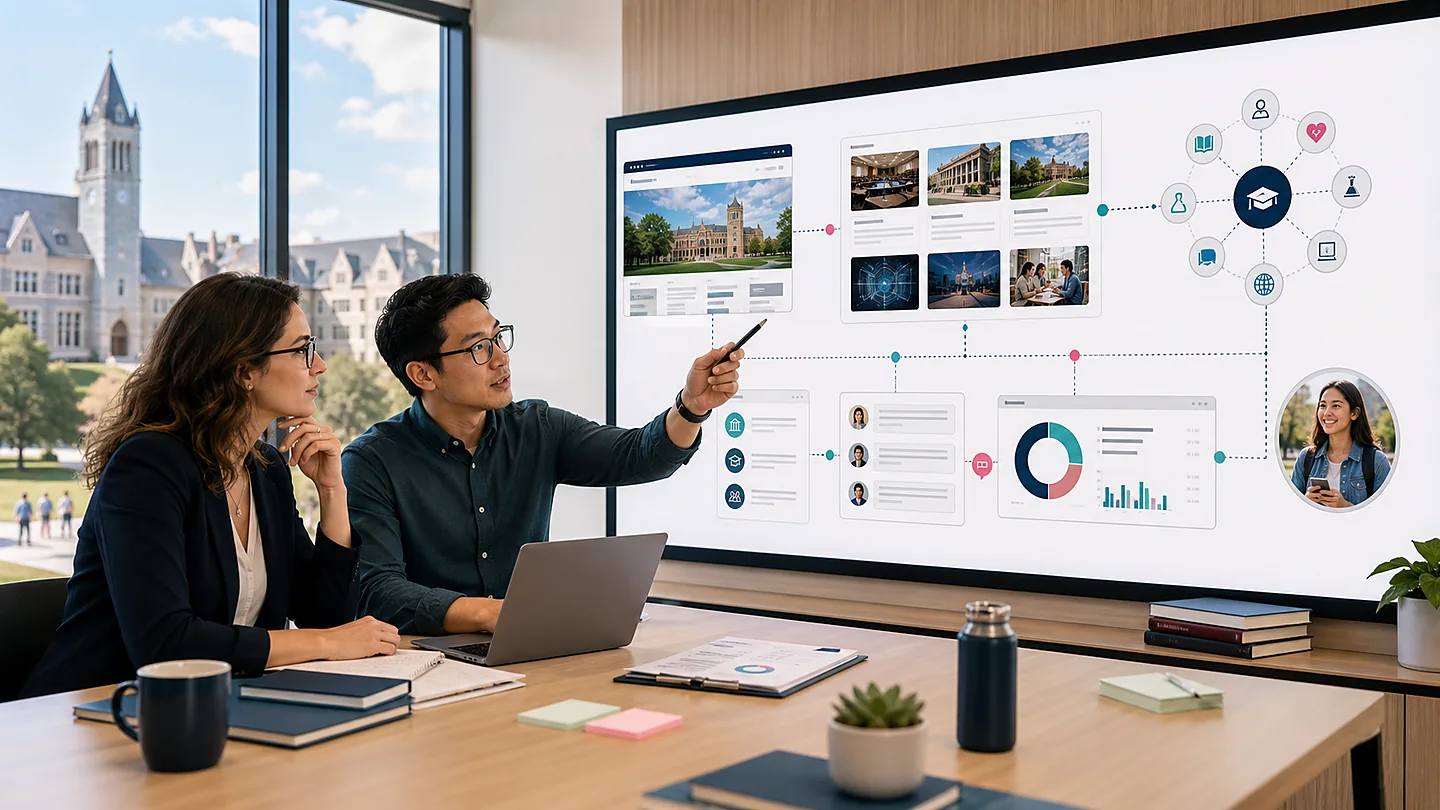
Education Link Building Strategies for EdTech, Universities & Training Brands in 2026
Education link building is the process of earning or acquiring relevant backlinks from publishers, universities, research pages, professional organizations, resource hubs, partner ecosystems, career sites and other websites that make sense for an education-focused brand.
The strategy should change depending on who you are. An EdTech SaaS company, a university, an online course platform, a tutoring business and a professional training provider should not chase the same backlinks with the same assets.
That is the main difference between a real education link-building program and a generic campaign filtered only by DA, DR or .edu.
This guide explains how to build an education backlink strategy around audience, linkable assets, target pages, publisher relevance, institutional trust, editorial context and measurable business goals.
If you specifically want to compare university and education backlink opportunities, start with EDU Backlinks. If you want publishers that accept education-focused articles, use Education Guest Posting Sites.
Explore this guide
- What Is Education Link Building?
- Why Education Link Building Is Different
- Five Education Brands That Need Different Strategies
- The Education Link-Building Framework
- 1. Original Research & Education Data
- 2. Free Tools, Templates & Open Resources
- 3. Education Guest Posting
- 4. University Resource-Page Outreach
- 5. Faculty, Research & Academic Citations
- 6. Course, Syllabus & Teaching Resources
- 7. Career Centers & Student Resources
- 8. Education Digital PR
- 9. Integration, Technology & Partner Links
- 10. Professional Associations & Industry Ecosystems
- 11. Alumni, Campus & Community Relationships
- 12. Broken-Link & Resource-Replacement Campaigns
- 13. Unlinked Mentions & Link Reclamation
- 14. Qualified Education Directories
- EdTech Privacy & Trust Considerations
- Link Building for Universities & Higher Education
- Link Building for EdTech SaaS
- Link Building for Online Courses & Training Brands
- Link Building for Tutoring & Student Services
- Choose the Right Target Pages
- Anchor Text Strategy
- International Education Link Building
- How to Measure Education Link Building
- 90-Day Education Link-Building Plan
- Copy-Ready Campaign Planner
- Google Link-Spam Policy Considerations
- Red Flags
- FAQs
What Is Education Link Building?
Education link building means developing backlinks that strengthen the authority, discoverability and referral footprint of a website serving an education audience.
That can include links from:
- education publications;
- EdTech publications;
- universities and colleges;
- faculty and research pages;
- libraries;
- career centers;
- professional associations;
- government and nonprofit resources;
- technology partners;
- industry media;
- student publications;
- training and certification websites;
- and relevant general publishers.
The goal is not to collect as many “education-looking” domains as possible. The goal is to earn a link profile that makes sense for the subjects, users and commercial pages your brand actually serves.
The Education Link-Building Framework
Before choosing a tactic, define six things:
- Target audience: Who should discover or trust this page?
- Target URL: Which page needs authority?
- Linkable reason: What deserves citation or editorial coverage?
- Publisher ecosystem: Who already serves the same audience?
- Link route: Guest post, citation, resource, PR, partner or another format?
- Business outcome: Rankings, discovery, referral visits, enrollment, demos, brand visibility or research reach?
A useful planning formula is:
Audience → Problem → Linkable Asset → Publisher Type → Article/Resource Context → Target Page
Five Education Brands That Need Different Strategies
| Brand Type | Primary Audience | Best Link Assets | Best Link Sources |
|---|---|---|---|
| EdTech SaaS | Teachers, schools, administrators, learners | Free tools, integrations, efficacy research, datasets | Education media, universities, tech partners, teacher resources |
| University / college | Students, parents, researchers, employers | Faculty expertise, research, alumni outcomes, public data | Media, associations, government, partners, research citations |
| Online course platform | Learners and career switchers | Career data, skill maps, free lessons, research | Career sites, education publishers, universities, industry media |
| Professional training / certification | Professionals and employers | Standards guides, salary data, certification research | Industry associations, trade media, career resources |
| Tutoring / student service | Students and parents | Calculators, study resources, local data, subject guides | Education resources, parent publishers, schools/universities where relevant |
Why Education Link Building Is Different
1. Education Audiences Are Fragmented
“Education” can mean:
- K-12 teachers;
- parents;
- school administrators;
- university students;
- faculty;
- researchers;
- instructional designers;
- corporate L&D buyers;
- career switchers;
- international students;
- or professionals seeking certification.
A backlink from a classroom-practice publisher may be excellent for a teacher tool but irrelevant to an executive-education program.
2. Many Education Brands Already Have Linkable Assets
Universities and EdTech companies can naturally create:
- research;
- learning-outcome data;
- course materials;
- public tools;
- faculty expertise;
- career data;
- open educational resources;
- student resources;
- and partnerships.
Current higher-education SEO guidance increasingly recommends building from these real assets rather than chasing generic link lists.
3. Trust Matters to the Link Prospect
An education editor or university curator may ask:
- Who created this resource?
- Is the information current?
- Is the methodology transparent?
- Does it collect student data?
- Is access genuinely free?
- Is a commercial relationship disclosed?
- Does it help our audience?
Those questions are part of the link-building strategy, not merely conversion optimization after the link is earned.
1. Original Research & Education Data
Original research is one of the strongest education link assets because journalists, faculty, policy writers and industry publishers need evidence they can cite.
EdTech Research Ideas
- course completion behavior;
- learning engagement by format;
- teacher adoption trends;
- skill-demand changes;
- assessment behavior;
- AI usage in education;
- study-time patterns;
- language-learning trends;
- career outcomes;
- or anonymized product usage patterns.
University Research Ideas
- faculty research summaries;
- regional economic impact;
- graduate outcomes;
- public-interest datasets;
- community research;
- research-center reports;
- or longitudinal program data.
Do not manufacture a “study” around an SEO headline. Explain sample, methodology, time period, limitations and source provenance.
For university-specific citation acquisition, use Academic Research & Citation Backlinks .
2. Free Tools, Templates & Open Resources
A useful education tool can earn links repeatedly because it helps users complete a task.
Examples:
- grade calculator;
- study planner;
- career salary calculator;
- reading-level tool;
- citation helper;
- rubric generator;
- lesson template;
- skill map;
- accessibility checklist;
- internship database;
- research template;
- or open educational resource.
The tool should continue working after the backlinks arrive. Do not turn a free resource into a hard paywall without considering the universities and publishers that linked to it.
3. Education Guest Posting
Guest posting can be useful when you need a controlled article topic and a relevant publisher audience.
Target publication categories can include:
- education;
- EdTech;
- teacher resources;
- higher education;
- careers;
- training;
- technology;
- industry trade media;
- business;
- and niche publications serving the learner’s end market.
An EdTech platform for nursing students, for example, may benefit from a mix of:
- education publishers;
- healthcare career publishers;
- nursing publications;
- student resources;
- and relevant technology publishers.
Browse Education Guest Posting Sites and the broader Guest Posting Sites Marketplace.
4. University Resource-Page Outreach
University libraries, departments, career centers and student-service teams often maintain curated external-resource pages.
Strong targets are pages where your asset fills a real resource gap.
The pitch should explain:
- which exact university page you reviewed;
- who its audience is;
- what your resource helps them do;
- why it belongs beside the existing resources;
- and whether access is free or requires login/payment.
Use the full EDU Resource Page Backlinks workflow.
5. Faculty, Research & Academic Citations
Faculty links work best when the resource supports:
- research;
- teaching;
- professional practice;
- student projects;
- data;
- software;
- or public scholarship.
Do not run bulk professor outreach based solely on the university’s domain metrics.
6. Course, Syllabus & Teaching Resources
Teaching pages can link to:
- software;
- datasets;
- tutorials;
- case studies;
- readings;
- industry resources;
- open textbooks;
- or technical documentation.
The target needs instructional value, not simply topical relevance.
7. Career Centers & Student Resources
This is especially useful for:
- job boards;
- resume tools;
- salary data;
- career assessment;
- internship marketplaces;
- professional communities;
- certification providers;
- and student-support tools.
A public career-resource backlink should be separated from a private Handshake or career-platform listing.
8. Education Digital PR
Digital PR can earn links when the story is independently newsworthy.
Possible Angles
- new education dataset;
- student affordability trend;
- skills-gap analysis;
- AI-in-learning survey;
- teacher workload research;
- career-change patterns;
- regional education data;
- language-learning trends;
- or verified product/industry research.
Build the story around the finding, not around “we want backlinks.”
9. Integration, Technology & Partner Links
EdTech companies often integrate with:
- LMS platforms;
- SIS platforms;
- SSO providers;
- video tools;
- assessment systems;
- content providers;
- developer platforms;
- or partner marketplaces.
A legitimate integration can create:
- partner directory links;
- integration documentation;
- app marketplace listings;
- joint case studies;
- technical tutorials;
- or launch announcements.
The integration should exist first. Do not create a superficial “partner page” solely for reciprocal links.
10. Professional Associations & Industry Ecosystems
Education brands can earn links through genuine involvement with:
- teaching associations;
- professional societies;
- training organizations;
- accreditation-related bodies;
- industry conferences;
- research communities;
- and discipline-specific organizations.
Possible link types:
- member directories;
- event speakers;
- resource contributions;
- research citations;
- webinars;
- partner pages;
- or industry reports.
11. Alumni, Campus & Community Relationships
Real university relationships can create links through:
- alumni business directories;
- founder profiles;
- campus publications;
- community partnerships;
- student projects;
- guest lectures;
- events;
- or entrepreneurship programs.
For specific routes, use EDU Alumni Backlinks and EDU Student Blog & Campus Publication Backlinks .
12. Broken-Link & Resource-Replacement Campaigns
Find a university or education page linking to a dead external resource, reconstruct what the original resource provided, and suggest the closest valid replacement.
Strong replacement:
dead internship database → current internship database
Weak replacement:
dead internship database → generic “how to get an internship” article
Use EDU Broken Link Building .
13. Unlinked Mentions & Link Reclamation
Before creating new outreach, look for authority your brand already earned.
Unlinked Brand Mentions
Find articles that mention:
- brand;
- founder;
- research;
- tool;
- report;
- course;
- or dataset
without linking to the primary source. Where a link would genuinely help readers, request it as a source citation.
Lost Backlinks
Check whether links disappeared because:
- your URL changed;
- the publisher refreshed the article;
- the page was consolidated;
- or your site returned an error.
Fix your own redirects before asking publishers to do extra work.
14. Qualified Education Directories
Directories are useful when they document a real status or relationship.
Examples:
- alumni business directory;
- recognized student organization;
- community partner;
- licensed vendor;
- technology partner;
- certified supplier;
- or professional association member.
Avoid low-quality directories whose primary purpose is accepting links from anyone.
For university-specific directory auditing, use EDU Directory Backlinks .
EdTech Privacy & Trust Considerations
Privacy can directly affect whether a school, university or educator is willing to recommend an EdTech resource.
The U.S. Department of Education’s Student Privacy Policy Office maintains guidance for education technology vendors that collect or use student personally identifiable information and provides resources related to FERPA, online educational services, data sharing and privacy/security practices.
Sources: U.S. Department of Education — Privacy and Education Technology and Education Technology Vendor Resources .
Before University or School Outreach, Make Sure You Can Explain
- what data the tool collects;
- whether an account is required;
- who the product is designed for;
- how privacy is handled;
- whether student data is used for advertising;
- how users delete or export data where applicable;
- and where the privacy policy is located.
This is not legal advice. Privacy obligations depend on jurisdiction, users, contracts and how the product handles data.
Link Building for Universities & Higher Education
Universities often start with substantial natural authority, so the question is not always:
“How do we get more backlinks?”
It may instead be:
“Which programs, research pages or recruitment pages have an authority gap compared with the institutions competing for the same students?”
Strong University Link Assets
- faculty research;
- public datasets;
- research centers;
- expert commentary;
- student and alumni outcomes;
- local economic impact;
- public events;
- open educational resources;
- community programs;
- and distinctive academic programs.
University Link Sources
- local and national media;
- research publications;
- professional societies;
- government agencies;
- industry partners;
- employers;
- conference websites;
- nonprofits;
- and discipline-specific publishers.
Do not prioritize a link-building campaign merely because “backlinks are an SEO best practice.” Compare the backlink and search visibility gap first.
Link Building for EdTech SaaS
EdTech SaaS usually needs a stronger mix of commercial SEO and trust-building.
Recommended Link Stack
- education and EdTech editorial publications;
- free tool/resource pages;
- integration and partner pages;
- original product/research data;
- teacher or institutional resources;
- digital PR;
- relevant university links where legitimate;
- and industry/technology publications.
Example
Product: AI feedback platform for university writing centers.
Better link mix:
- writing-center resources;
- higher-education technology publications;
- AI/education research;
- university teaching resources;
- writing pedagogy publishers;
- integration partners;
- and relevant SaaS/AI media.
Weak link mix: 30 generic “high DR” lifestyle guest posts.
Link Building for Online Courses & Training Brands
Course providers can earn links through:
- career outcomes research;
- industry salary data;
- certification roadmaps;
- free lessons;
- skills-gap studies;
- career-center resources;
- industry associations;
- education publishers;
- employer partnerships;
- and subject-specific trade publications.
Avoid making unsupported claims such as:
- “guaranteed job after graduation”;
- “guaranteed salary increase”;
- or “industry-recognized certification”
unless the claim is accurate and properly supported.
Link Building for Tutoring & Student Services
Tutoring, admissions and student-service brands can build links around:
- free study tools;
- subject guides;
- exam resources;
- parent education;
- local education data;
- college-planning resources;
- career resources;
- or public research.
If the service handles high-stakes education decisions, be especially careful with:
- admissions guarantees;
- test-score guarantees;
- scholarship guarantees;
- credential claims;
- and misleading comparisons.
Choose the Right Target Pages
Link building becomes inefficient when every placement points to the homepage.
Potential Targets
- product/category pages;
- course/program pages;
- research assets;
- free tools;
- resource hubs;
- career content;
- comparison pages;
- international landing pages;
- and high-value informational pages that internally support commercial pages.
Before outreach, evaluate:
- business value;
- search opportunity;
- intent fit;
- technical readiness;
- internal-link role;
- and whether the page is stable enough to deserve external links.
Anchor Text Strategy for Education Link Building
Education publishers and institutional editors often prefer natural source wording.
Natural Anchor Categories
- brand name;
- organization name;
- tool name;
- research/report title;
- URL/naked anchor;
- topical descriptive wording;
- or contextual phrase chosen by the editor.
Do not impose a universal ratio such as “30% exact match, 40% partial match.” There is no magic safe percentage.
Track anchor history by target URL and let article context come before keyword selection.
For campaign-level planning, use Anchor Text Optimization.
International Education Link Building
An education brand expanding internationally should not translate the same publisher list and call the campaign localized.
Review:
- country;
- language;
- student market;
- qualification terminology;
- local education system;
- local publishers;
- local universities and associations;
- regional search behavior;
- and local regulatory/claims requirements where relevant.
A UK postgraduate-training page may need a different publisher ecosystem from a US professional-certificate page or an Australian vocational-training page.
For managed country/language campaigns, see International Guest Posting Services .
How to Measure Education Link Building
Do not measure success only by the number of links delivered.
Link-Level Metrics
- referring domain;
- exact linking page;
- page type;
- topical relevance;
- audience relevance;
- link attribute;
- anchor/context;
- public/indexable status;
- and referral visits.
Target-Page Metrics
- impressions;
- clicks;
- query coverage;
- ranking movement;
- organic entrances;
- assisted conversions;
- enrollment/demo/signup events;
- and internal-link distribution.
Brand / Research Metrics
- unlinked mentions;
- journalist citations;
- academic references;
- partner mentions;
- and repeated citations to research assets.
Do not attribute all ranking movement to one backlink. Search performance changes for many reasons.
90-Day Education Link-Building Plan
Days 1–30: Strategy & Assets
- identify priority target pages;
- compare competitor referring domains;
- map audience/publisher ecosystems;
- choose 2–3 link routes;
- create or improve one strong linkable asset;
- build publisher/resource prospect lists;
- and record existing anchor/link history.
Days 31–60: Outreach & Publishing
- launch education guest-post outreach;
- pitch research to education/trade media;
- run resource-page outreach;
- contact relevant partners/integrations;
- reclaim unlinked mentions;
- and test broken-link opportunities.
Days 61–90: QA & Reallocation
- verify live links;
- measure response and acceptance by tactic;
- compare referral quality;
- check target-page search movement;
- pause low-quality publisher categories;
- expand the strongest asset/tactic;
- and update the next 90-day allocation.

Copy-Ready Education Link-Building Campaign Planner
Campaign tracker
EDUCATION LINK-BUILDING CAMPAIGN

BRAND:
DATE:
OWNER:

==================================================
BUSINESS / AUDIENCE
==================================================

Brand type:
[ ] EdTech SaaS
[ ] University / college
[ ] Online course platform
[ ] Training / certification
[ ] Tutoring / student service
[ ] Education publisher
[ ] Other

Primary audience:
Secondary audience:
Country:
Language:

Primary business goal:
[ ] Enrollment
[ ] Demo
[ ] Signup
[ ] Course purchase
[ ] Research reach
[ ] Brand authority
[ ] Organic traffic
[ ] Other

==================================================
TARGET PAGES
==================================================

Target URL 1:
Intent:
Business value:
Current search visibility:
Linkable reason:

Target URL 2:
Intent:
Business value:
Current search visibility:
Linkable reason:

==================================================
LINKABLE ASSETS
==================================================

[ ] Original research
[ ] Dataset
[ ] Free tool
[ ] Template
[ ] Open educational resource
[ ] Career resource
[ ] Integration
[ ] Faculty / expert source
[ ] Course resource
[ ] Community / alumni relationship
[ ] Other

Asset URL:
Last updated:
Evidence/methodology:
Privacy reviewed where relevant? Yes / No / N/A

==================================================
TACTICS
==================================================

[ ] Education guest posts
[ ] EdTech publications
[ ] University resource pages
[ ] Faculty / academic citations
[ ] Course / syllabus resources
[ ] Career centers
[ ] Digital PR
[ ] Partner / integration links
[ ] Associations
[ ] Alumni / campus media
[ ] Broken-link replacement
[ ] Unlinked mention reclamation
[ ] Qualified directories

==================================================
PROSPECT QUALIFICATION
==================================================

Publisher / institution:
Exact page:
Audience:
Topic fit:
Page type:
Organic visibility:
Recent activity:
Existing external links:
Commercial policy:
Target URL:
Article / pitch angle:
Natural anchor/context:

==================================================
RESULT
==================================================

Outreach date:
Response:
Live URL:
Target URL:
Anchor:
Link attribute:
Public/indexable? Yes / No / Unknown
Referral visits:
Notes:

==================================================
REVIEW
==================================================

Best-performing tactic:
Weakest tactic:
Best publisher category:
Target-page movement:
Next 30-day action:
Next review date:
Google Link-Spam Policy Considerations
Google’s current spam policies define link spam as links created primarily to manipulate rankings.
Examples include:
- buying or selling links for ranking purposes;
- exchanging goods or services for links;
- automated programs or services that create links;
- paid advertorial/native links that pass ranking credit;
- optimized anchor text in guest posts;
- low-quality directory links;
- optimized forum-comment/signature links;
- and low-value content created primarily to manipulate linking/ranking signals.
Google also says advertising and sponsorship links are not policy violations when appropriately qualified, such as with rel="sponsored" or nofollow.
Source: Google Search Central — Spam Policies .
For education brands, the practical rule is:
build links because the article, research, resource, partnership or citation makes sense to real users— not merely because an education domain has strong third-party metrics.
Education Link-Building Red Flags
- Every campaign is sold as “high-authority EDU links.”
- No distinction between EdTech, university, course or tutoring audiences.
- Publisher relevance is ignored in favor of DA/DR.
- All links point to the homepage.
- Every article is written around an exact-match anchor.
- Same generic education article is reused across multiple publishers.
- University profile/forum/comment links are reported as editorial citations.
- Login-only pages are counted as public backlinks.
- Fake faculty, student or alumni identities are used.
- Scholarships exist only to manufacture links.
- Integration pages are created for partners that do not really integrate.
- Research has no transparent methodology.
- Student privacy is ignored when pitching EdTech tools to institutions.
- Free resources become inaccessible after institutions link to them.
- Unrelated high-DR publishers dominate the campaign.
- Paid dofollow links are described as automatically Google-safe.
- Rankings, enrollment, traffic or revenue are guaranteed.
Choose an Education Link-Building Route
| Intent | Best EduGuestPost Page |
|---|---|
| Broader education link-building strategy | Education Link Building Strategies |
| Compare / buy EDU backlink opportunities | EDU Backlinks |
| Browse education publishers | Education Guest Posting Sites |
| Get no-publisher-fee EDU links | How to Get Free EDU Backlinks |
| Earn university resource links | EDU Resource Page Backlinks |
| Earn academic citations | Academic Research & Citation Backlinks |
| Run university broken-link outreach | EDU Broken Link Building |
Education Link Building FAQs
What is education link building?
Education link building is the process of earning or acquiring relevant backlinks for education-focused websites from publishers, universities, research sites, professional organizations, partners and other relevant sources.
What is EdTech link building?
EdTech link building focuses specifically on education technology companies and can combine education media, university resources, free tools, integrations, original research, digital PR and technology publishers.
Is education link building different from SaaS link building?
Often yes. EdTech shares SaaS tactics such as integrations and product-led assets, but education campaigns also depend heavily on teaching usefulness, institutional trust, student privacy, research and education-specific publishers.
Do universities need link building?
Not always. Universities often attract strong links naturally. First compare authority and search visibility at the program/page level before deciding that link acquisition is the priority.
Are .edu backlinks necessary for EdTech SEO?
No. A healthy EdTech link profile can include education publishers, technology sites, industry media, professional associations, partners, universities and other relevant sources.
Are .edu backlinks automatically better?
No. Evaluate the exact page, relevance, audience, editorial purpose, visibility and link treatment.
What content earns the most education backlinks?
Strong formats include original research, unique datasets, free tools, teaching resources, career resources, technical documentation and timely evidence-led stories.
Can education guest posts help?
Yes, when the publisher serves a relevant audience and the article topic naturally supports the target page.
Can an EdTech company earn university links?
Yes, through useful resources, research, faculty/course references, career tools, integrations, partnerships and other legitimate routes.
What links are best for online course platforms?
Career resources, industry publishers, education media, skill/salary research, professional associations and relevant university resources can all be useful depending on the target audience.
What links are best for professional training companies?
Industry associations, trade publications, career resources, certification/skills research and relevant education publishers are often stronger than generic EDU links.
Should I build links to course pages directly?
Sometimes. Other campaigns may earn links more naturally to research or resource assets, then use internal links to support commercial course pages.
How should I choose a target page?
Evaluate business value, search opportunity, intent fit, technical readiness, linkability and internal-link role.
How many backlinks does an education site need?
There is no universal number. Compare the actual target page and competing pages rather than applying a site-wide backlink quota.
What anchor text should education backlinks use?
Natural brand, resource, report, tool and descriptive anchors are usually easier to justify than repeated commercial exact-match anchors.
Can I use the same strategy in every country?
No. Localize publishers, education terminology, audience, institutions, language and claims.
How do I measure education link building?
Track link quality, page relevance, referral visits, target-page search visibility and business outcomes rather than link count alone.
Can link building guarantee higher enrollment?
No. Enrollment depends on many factors including brand, program fit, search demand, pricing, admissions, content, conversion experience and competition.
Can paid education links be Google-safe?
Google says buying links for ranking purposes can violate its spam policies. Paid advertising or sponsorship links should be appropriately qualified under Google’s current guidance.
Where can I compare EDU backlink opportunities?
Use EDU Backlinks.
Build Education Links Around the Audience, Not the Domain Extension
A strong education link-building campaign starts by asking:
- who needs this page;
- what makes it worth citing;
- which publishers and institutions serve the same audience;
- which link route fits the asset;
- and which business/search outcome the target page is expected to support.
Compare EDU Backlink Opportunities | Browse Education Guest Posting Sites | Explore Guest Posting
Talk to EduGuestPost
Find the Right Link-Building Routes
Tell us about your education brand, audience, target pages and existing resources. We can help you compare suitable publisher and outreach options.