

Faculty & Professor Backlinks in 2026: How to Earn University Academic Links
Faculty and professor backlinks are links from pages associated with real academics: official university profiles, personal academic websites, lab or project pages, department resources, course materials, expert pages and other faculty-controlled or faculty-influenced academic content.
The goal is not to “get a link from a professor” because the professor happens to work on a high-authority university domain. The goal is to create something useful enough that an academic has a real professional, research or teaching reason to reference it.
Faculty outreach differs from maintaining an institutional profile or earning a research citation. Compare the page types and identify the academic reason your resource belongs before contacting anyone.
Compare Faculty Link Types | Use the 14-Step Outreach Workflow | Copy the Faculty Outreach Tracker
Explore this guide
- What Are Faculty & Professor Backlinks?
- A Faculty Backlink Is Not One Link Type
- Types of Faculty & Professor Backlinks
- Faculty Profile Link vs Earned Faculty Link
- Who Actually Controls a Faculty Page?
- What Current University Policies Show
- The Academic-Worthiness Test
- What Professors May Actually Want to Link To
- Research Synthesis / “Meta Article” Outreach
- Do Not Mislabel a Research Summary as a Meta-Analysis
- Teaching Resources & Course Materials
- Lab, Project & Research-Center Links
- Faculty Expert & Media Pages
- Personal Faculty Websites
- Can Faculty Pages Link to Commercial Websites?
- 14-Step Faculty Outreach Workflow
- 1. Define the Academic Discipline
- 2. Find Relevant Faculty
- 3. Search Operators for Faculty Link Research
- 4. Review the Professor’s Actual Work
- 5. Identify the Page They Can Influence
- 6. Write the Link Reason Before Outreach
- 7. Verify Academic Accuracy
- 8. Use the Correct Contact Route
- 9. Send a Specific, Low-Pressure Email
- 10. Invite Corrections
- 11. Follow Up Once, If Appropriate
- 12. Verify the Live Link
- 13. Maintain the Resource
- 14. Treat the Relationship as More Valuable Than One Link
- Anchor Text & Faculty Links
- Can You Buy Faculty / Professor Backlinks?
- Faculty Outreach Services: What Should Be Included?
- Faculty Link Quality Matrix
- Copy-Ready Faculty Outreach Tracker
- Other EDU Backlink Routes
- Representative Examples
- Red Flags
- Frequently Asked Questions
What Are Faculty & Professor Backlinks?
A faculty backlink is an external link from a web page connected to a university faculty member or other academic.
Depending on the institution, that page may be:
- an official faculty profile;
- a personal faculty website;
- a research-lab website;
- a project page;
- a department resource page;
- a course-resource page;
- a reading list;
- a faculty-authored article;
- a research-impact page;
- an expert / media profile;
- or another page the academic owns or helps maintain.
The person may be:
- professor;
- associate professor;
- assistant professor;
- lecturer;
- research professor;
- postdoctoral researcher;
- faculty fellow;
- lab director;
- or another academic expert.
A Faculty Backlink Is Not One Link Type
“Professor backlink” can describe several different situations.
They should be separated because control, context and editorial meaning differ.
Identity Link
Professor’s official profile links to their personal academic website, lab, project or professional page.
Teaching Link
Professor adds an external guide, dataset or tool to course resources.
Research / Project Link
Lab or research page cites an external dataset, method, partner or public resource.
Expert / Media Link
Faculty expert page points to:
- publications;
- media appearances;
- research projects;
- or relevant external professional work.
Personal Faculty Website Link
Professor independently links from a personal academic website they control.
Department / Resource Link
Faculty member recommends a useful external resource on a department or resource page.
Types of Faculty & Professor Backlinks
| Faculty Link Type | Typical Page | Who Controls It? | Legitimate Link Reason |
|---|---|---|---|
| Official profile link | University faculty directory | University + faculty | Personal site, lab, ORCID, project, professional identity |
| Personal faculty website | Faculty subdomain or external personal site | Faculty member, subject to institutional rules | Research, teaching, professional resources |
| Lab / project page | Research lab or project website | Faculty / research team | Data, tools, collaborators, methods, references |
| Course resource | Course page, syllabus, reading list | Faculty / department / LMS | Instructional usefulness |
| Department resource | Academic department website | Department + faculty | Useful professional / academic resource |
| Faculty expert / media page | University experts directory | University communications + faculty | Expertise, media work, public research |
| Research impact / project mention | Impact, project or news page | University / research team | Real collaboration, data use, public impact |
| Faculty-authored public article | University blog / publication | Faculty + editor | Source or resource supports article |
Faculty Profile Link vs Earned Faculty Backlink
Faculty Profile Link
A real professor updates their official profile with a legitimate:
- personal website;
- lab website;
- ORCID;
- Google Scholar;
- project site;
- or professional link.
That is primarily an identity / professional relationship link.
Earned Faculty Backlink
A professor or research team chooses to reference your external page because it is useful for:
- students;
- research;
- teaching;
- public understanding;
- data;
- methods;
- or professional practice.
If you are specifically evaluating the first type, read: EDU Profile Backlinks .
Who Actually Controls a Faculty Page?
“Professor’s page” does not always mean “the professor can add any link they want.”
University page control can be:
- central communications team;
- college / school web team;
- department administrator;
- faculty self-service CMS;
- research-center administrator;
- faculty member directly;
- or a combination.
Before outreach, identify who controls the exact page.
Example
A professor may be able to update:
- research interests;
- CV;
- lab URL;
- personal website;
but not:
- department homepage;
- official university policy;
- central press release;
- or the university’s commercial resources.
What Current University Faculty-Web Policies Show
Current university documentation confirms that faculty links are normal when they serve a real professional or academic purpose.
UTSA: Professional Relevance + Commercial Limits
UTSA’s current website policy distinguishes official faculty profile pages from personal faculty websites.
It says a personal faculty website may be linked from an official faculty profile when it is relevant to the faculty member’s scholarship, research activities or professional interests.
The same policy says the personal faculty website must not sell products / services or generate revenue if it is to be linked from the official profile.
Source: UTSA — Website Criteria & Requirements .
UC Merced: Faculty Profiles Can Include Lab Websites
UC Merced’s current engineering faculty webform shows that faculty profile information can include:
- lab website;
- social media;
- research interests;
- CV;
- and other professional information.
Source: UC Merced School of Engineering — Faculty Website Webform .
Salisbury: Personal Faculty Website Field
Salisbury University’s current faculty-profile guide includes a field for a personal faculty website and suggests that faculty may use it for more extensive professional material, ongoing work and related information.
Source: Salisbury University — Faculty Web Profile Guide .
Texas A&M Engineering: Personal Website, Scholar & ORCID Links
Texas A&M’s current engineering faculty-site guide recommends profile information that can include:
- personal website;
- Google Scholar;
- ORCID;
- LinkedIn;
- research interests;
- and professional biography.
Source: Texas A&M Engineering — Faculty Website User Guide .
These examples support an important principle:
External links on faculty pages can be normal, but they are generally tied to the academic’s real identity, research, teaching or professional role. They are not blank commercial-link inventory.
The Academic-Worthiness Test
This is an EduGuestPost planning framework, not a Google scoring system.
Before contacting a professor, score the resource qualitatively against eight questions:
- Subject fit: Does it match the professor’s actual research or teaching?
- Accuracy: Are claims sourced and represented correctly?
- Original value: Does it add data, synthesis, tools, explanation or application?
- Student / research utility: Can a professor reasonably use or share it?
- Commercial restraint: Is the educational value stronger than the sales pitch?
- Transparency: Are authorship, methodology and sources clear?
- Stability: Will the URL remain useful after outreach?
- Correction readiness: Are you willing to fix errors when an expert points them out?
If the resource fails several of these, do not compensate with more outreach volume.
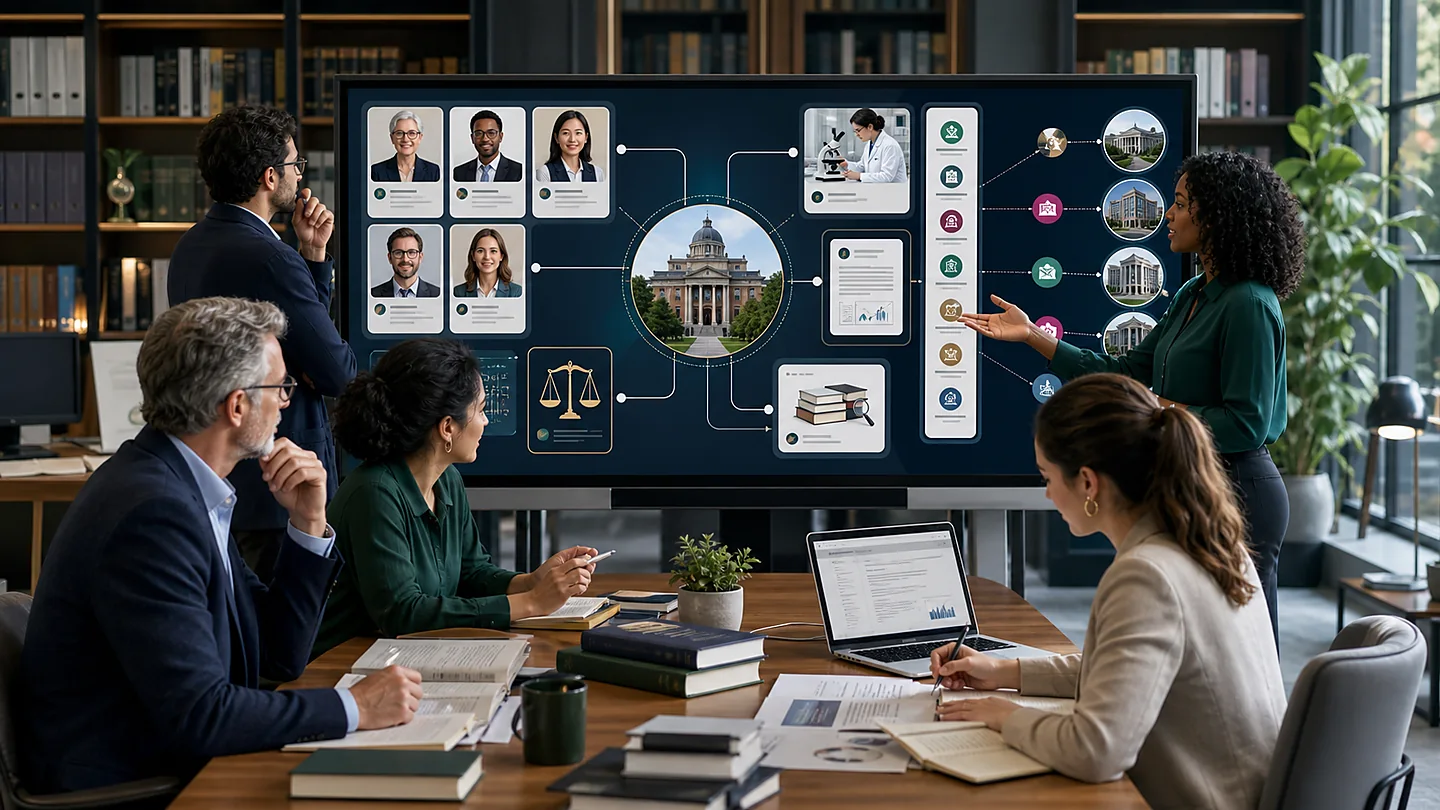
What Professors May Actually Want to Link To
Original Research
- survey results;
- industry dataset;
- benchmark study;
- replication resource;
- or transparent analysis.
Research Synthesis
- evidence review;
- plain-language summary of a research field;
- comparison of findings;
- or visual synthesis of multiple studies.
Teaching Tool
- calculator;
- interactive demo;
- open dataset;
- template;
- simulation;
- code repository;
- or practice resource.
Professional Reference
- standards guide;
- regulatory reference;
- technical glossary;
- career framework;
- or practitioner guide.
Public-Facing Research Translation
- accessible visualization;
- explainer for journalists / public;
- industry implications;
- or teaching-friendly summary.
Weak Assets for Professor Outreach
- thin listicle;
- generic AI summary;
- unsourced “statistics” page;
- commercial service page with little academic value;
- affiliate roundup;
- article that cherry-picks studies to support a product;
- resource with broken DOI / source links;
- content that overstates correlation as causation;
- or a page built around one exact-match backlink anchor.
Research Synthesis / “Meta Article” Outreach
Research-synthesis outreach begins with a careful overview of existing academic work:
- identify a commercially relevant question;
- read a substantial group of relevant academic papers;
- summarize and compare the findings carefully;
- publish a useful research-based overview;
- cite every researcher accurately;
- then notify the authors whose work you included.
The outreach works only when the article is good enough that the researcher is comfortable sharing it.
An accurate research synthesis should include:
- accurate author names;
- paper titles;
- publication years;
- journal / institution;
- DOIs or source URLs;
- clear limitations;
- and an invitation to correct misinterpretations.
Do Not Mislabel a Research Summary as a “Meta-Analysis”
The SEO phrase “meta article” should not be confused with the academic term meta-analysis.
A real meta-analysis generally uses explicit systematic methods and statistical techniques to combine results across studies.
If you simply:
- read 20 papers;
- summarize their findings;
- compare themes;
- and explain implications,
call it:
- research synthesis;
- evidence review;
- research-based overview;
- literature-informed guide;
- or another accurate description.
Academic credibility is lost quickly when methodology is overstated.
Teaching Resources & Course Materials
Professors can link to outside resources because those resources help students learn.
Potential Teaching Assets
- interactive calculator;
- open dataset;
- practice exercises;
- case study;
- industry standard / reference;
- public technical documentation;
- visual explainer;
- code repository;
- simulation;
- or current professional toolkit.
The professor should choose the resource because it improves the course, not because you offer an incentive for a link.
Lab, Project & Research-Center Backlinks
Research groups often maintain:
- people pages;
- software / tools;
- datasets;
- collaborators;
- publications;
- project resources;
- funders;
- and external professional references.
Current university lab pages commonly link to faculty websites, Google Scholar, personal websites and current academic positions.
A legitimate external link can fit when your organization:
- collaborates on the research;
- hosts the dataset;
- provides a tool used in the project;
- funds a disclosed project;
- or publishes a resource directly relevant to the lab’s work.
Faculty Expert & Media Pages
Universities increasingly package faculty expertise for journalists, associations, public agencies and industry audiences.
Useful faculty expert pages explain:
- topics the faculty member can comment on;
- current issues connected to their research;
- existing publications / presentations;
- and how media or organizations can contact them.
That creates natural opportunities for external publishers to cite the professor, while the professor’s university page can sometimes reference:
- media appearances;
- public research;
- projects;
- or authoritative external work.
Personal Faculty Websites
A professor’s personal academic website may be hosted:
- on the university domain;
- on a faculty subdomain;
- through an institutional WordPress / OpenScholar service;
- or on an external personal domain.
Qatar University currently provides faculty personal websites through an institutional faculty CMS.
UC Merced allows faculty-site options through its university web infrastructure, while UTSA explicitly recognizes personal faculty websites linked from official profiles when they meet its criteria.
That creates an important SEO lesson:
A good professor link does not need to be literal
.edu. A respected researcher’s personal domain can be more relevant and more genuinely controlled than a weak university page.
Can Faculty Pages Link to Commercial Websites?
Sometimes, but the page and institutional policy matter.
Stronger cases include:
- commercial company publishes a free research dataset;
- software provides a genuinely useful teaching tool;
- company collaborates on a research project;
- faculty member is legitimately associated with a startup or spinout;
- professional resource is important to the course / discipline;
- or public research is hosted on the commercial domain.
Weaker cases include:
- pricing page;
- affiliate landing page;
- generic service page;
- unrelated money page;
- or link offered in exchange for payment / benefit.
UTSA’s current faculty-web policy is a useful reminder: institutional rules may explicitly limit commercial use of faculty-linked personal sites.
14-Step Faculty & Professor Backlink Outreach Workflow
- Define the academic discipline.
- Choose one resource / asset.
- Find relevant faculty and researchers.
- Read their current work.
- Identify the page / resource they can actually influence.
- Write a specific professional reason for the link.
- Verify your academic claims and citations.
- Use the correct contact route.
- Send a short, individualized email.
- Invite corrections or clarification.
- Follow up once if appropriate.
- Verify the live link / page.
- Maintain the resource.
- Preserve the relationship beyond one backlink.
1. Define the Academic Discipline
Do not begin with:
“I want high-DA university links.”
Begin with:
- what problem the resource addresses;
- which discipline studies it;
- which subdiscipline is most relevant;
- and which students / researchers use the information.
Example
Asset: public dataset on logistics bottlenecks.
Possible academic fields:
- supply-chain management;
- operations research;
- transportation;
- industrial engineering;
- economics;
- or public policy.
2. Find Relevant Faculty
Good prospecting sources include:
- faculty directories;
- department sites;
- Google Scholar;
- ORCID;
- research-lab pages;
- conference programs;
- papers you already cite;
- professional associations;
- and university expert directories.
Prioritize relevance over university prestige.
A professor whose research directly overlaps the resource is a stronger prospect than a famous academic who works in a different area.
3. Search Operators for Faculty Link Research
Faculty Discovery
site:.edu faculty "YOUR TOPIC"
site:.edu professor "YOUR TOPIC"
site:.edu "research interests" "YOUR TOPIC"
site:.edu "faculty profile" "YOUR TOPIC"
site:.edu "assistant professor" "YOUR TOPIC"
site:.edu "associate professor" "YOUR TOPIC"
Faculty Website Discovery
site:.edu "personal website" professor "YOUR TOPIC"
site:.edu "faculty website" "YOUR TOPIC"
site:.edu inurl:faculty "YOUR TOPIC"
site:.edu inurl:people professor "YOUR TOPIC"
Lab / Project Discovery
site:.edu lab "YOUR TOPIC"
site:.edu "research lab" "YOUR TOPIC"
site:.edu "research group" "YOUR TOPIC"
site:.edu "research center" "YOUR TOPIC"
site:.edu project faculty "YOUR TOPIC"
Teaching / Resource Discovery
site:.edu professor "recommended resources" "YOUR TOPIC"
site:.edu faculty "course resources" "YOUR TOPIC"
site:.edu syllabus "YOUR TOPIC"
site:.edu "recommended reading" "YOUR TOPIC"
site:.edu "teaching resources" "YOUR TOPIC"
Use these for discovery. Do not send the same link request to every result.
4. Review the Professor’s Actual Work
Before contact, read enough to understand:
- their research area;
- current projects;
- recent papers;
- courses;
- public resources;
- and whether your asset fits.
Do not cite a paper based only on its title or abstract and then claim conclusions the study did not establish.
Record
Professor:
Institution:
Department:
Research area:
Relevant paper / project:
Relevant course:
Why our asset fits:
Page they appear to control:
Potential audience:
5. Identify the Page the Professor Can Actually Influence
Possible pages:
- personal academic site;
- lab resources;
- course page;
- reading list;
- faculty profile website field;
- department resource page;
- project page;
- expert page;
- or none.
If there is no plausible page, do not create a fake reason to request a faculty-profile link.
6. Write the Link Reason Before Outreach
Every professor prospect should have one sentence explaining why the resource belongs.
Strong
Professor X teaches a graduate course on supply-chain resilience; our public dataset adds current port-delay data that is not included in the course’s existing external resources.
Strong
We cited Professor Y’s 2025 study accurately in a research synthesis for practitioners and created a downloadable visualization of the paper’s main non-causal findings.
Weak
University has DR 91 and professor page can link externally.
If the last sentence is the only reason, remove the prospect.
7. Verify Academic Accuracy Before Contact
Check:
- author names;
- paper title;
- publication year;
- journal / conference;
- DOI / source;
- study population;
- limitations;
- causal vs correlational claims;
- and whether newer evidence changes the conclusion.
If the page summarizes research, include a visible reference section.
If your interpretation is uncertain, phrase it cautiously.
8. Use the Correct Contact Route
Good routes can include:
- institutional faculty email;
- lab contact;
- research group contact;
- department administrator when they maintain the resource page;
- media relations team for expert pages;
- or a published faculty-site contact form.
Do not scrape thousands of faculty emails for an unrelated bulk campaign.
9. Send a Specific, Low-Pressure Email
Research-Citation Notification
Subject: Your research on [topic] was included in our overview
Hi Professor [Name], I came across your paper, “[Paper Title],” while preparing a research-based overview of [topic].
We referenced the paper in the section on [specific issue] and linked to the original source here: [URL].
I thought you might like to see how the research was represented. If the overview is useful for your students, research page or other readers, you are welcome to share it. If I have misunderstood any part of the study, I would also appreciate the correction.
Teaching Resource Suggestion
Subject: Free [tool/dataset] for [course topic]
Hi Professor [Name], I noticed your [course/resource page] covers [specific subject]. We maintain a free [tool/dataset/resource] that lets students [specific useful task].
It is here: [URL]. If it is useful for the course, feel free to use or share it. No problem if it is not a fit.
Do Not Send
Your university has high DA. Please add our dofollow link with the anchor “best [commercial keyword].”
10. Invite Corrections
A correction invitation is valuable when your content is built around academic work.
Add a visible note such as:
If you are an author of research cited on this page and believe we have misrepresented your findings, please contact us with the relevant correction.
This improves:
- accuracy;
- trust;
- researcher engagement;
- and long-term quality.
11. Follow Up Once, If Appropriate
Faculty receive:
- student email;
- administrative requests;
- research collaboration;
- review requests;
- conference invitations;
- media inquiries;
- and spam.
One concise follow-up may be reasonable. Repeated SEO follow-ups are not.
Example
Hi Professor [Name], one quick follow-up in case my note was buried. We included your work on [specific topic] in this research overview: [URL]. No action is needed; I mainly wanted to make sure you saw how the study was represented.
12. Verify the Live Faculty Backlink
If a link is added, record:
- institution;
- faculty member;
- department;
- linking page URL;
- page type;
- target URL;
- anchor;
- surrounding context;
- link attribute;
- page accessibility;
- indexability;
- and date verified.
Do not ask the professor to alter a natural title / resource link merely to insert an exact-match keyword.
13. Maintain the Resource
Faculty are more likely to remove external links when resources become:
- outdated;
- broken;
- redirected to a sales page;
- gated;
- misleading;
- or substantially different from the page they originally chose to cite.
Keep:
- data current;
- sources live;
- methodology visible;
- corrections documented;
- and the URL stable.
14. Treat the Academic Relationship as More Valuable Than One Link
A successful interaction can lead to:
- future corrections;
- research collaboration;
- interviews;
- guest lectures;
- expert quotes;
- research citations;
- conference involvement;
- student resources;
- or future editorial links.
Do not turn a helpful academic interaction into repeated backlink requests.
Anchor Text & Faculty Backlinks
Faculty / academic pages commonly use natural descriptive anchors.
Natural Examples
- personal website;
- lab website;
- project name;
- dataset title;
- research report title;
- tool name;
- organization name;
- or descriptive resource wording.
Google’s current link guidance recommends anchor text that is descriptive, reasonably concise and relevant, while warning against cramming keywords into links.
Source: Google Search Central — Link Best Practices .
Use: Anchor Text Optimization for broader campaign planning.
Can You Buy Faculty or Professor Backlinks?
You can hire an agency or specialist to conduct academic outreach.
You should not assume that a legitimate service can simply sell guaranteed links from named professors.
Reasonable Paid Work
- researcher prospecting;
- asset planning;
- literature research;
- content / research synthesis;
- contact research;
- manual outreach;
- response management;
- correction handling;
- and link verification.
Questionable Offer
- “Buy 25 professor backlinks”;
- “Guaranteed links from faculty profiles”;
- fake faculty / contributor identities;
- payment to academics for unqualified ranking links;
- or exact-match anchor guarantees on official university pages.
Google’s current spam policies identify buying / selling links for ranking purposes, exchanging goods / services for links and creating links primarily to manipulate rankings as link spam.
Source: Google Search Central — Spam Policies .
Faculty Outreach Services: What Should Be Included?
If you hire an academic outreach service, require reporting that separates the work performed from the editorial outcome.
Useful Service Fields
- target discipline;
- asset / resource URL;
- researcher criteria;
- institutions;
- researcher relevance notes;
- current faculty status;
- page type;
- contact source;
- outreach date;
- response;
- correction requests;
- live link URL;
- link context;
- link attribute;
- and recheck date.
Do Not Accept a Report That Says Only
University | DA | Faculty Link | DeliveredYou need to know why the professor linked and what type of page actually contains the link.
Faculty Link Quality Matrix
This is an EduGuestPost evaluation framework, not a Google scoring system.
| Signal | Stronger Faculty Link | Weaker / Questionable Link |
|---|---|---|
| Faculty relevance | Professor studies / teaches the exact topic | Unrelated discipline |
| Page control | Faculty legitimately controls / influences page | Professor cannot edit the page |
| Resource | Original data, tool, research synthesis, teaching asset | Thin money page |
| Link reason | Improves teaching, research or professional understanding | Only reason is university authority |
| Accuracy | Sources and limitations clear | Overstated / cherry-picked research |
| Anchor | Resource title / brand / descriptive wording | Forced exact-match commercial keyword |
| Commerciality | Educational value dominates | Sales page disguised as academic resource |
| Relationship | Real professional reason for contact | Bulk scraped outreach |
Copy-Ready Faculty & Professor Backlink Outreach Tracker
Campaign tracker
FACULTY / PROFESSOR BACKLINK OUTREACH TRACKER

CAMPAIGN:
CLIENT / BRAND:
RESOURCE URL:
REVIEWER:
DATE:

==================================================
RESOURCE
==================================================

Resource title:
Resource type:
[ ] Original research
[ ] Dataset
[ ] Research synthesis
[ ] Tool / calculator
[ ] Teaching resource
[ ] Technical guide
[ ] Professional reference
[ ] Public explainer
[ ] Other

Primary academic discipline:
Subdiscipline:
Student / researcher audience:
Methodology visible? Yes / No
Primary sources present? Yes / No
Limitations visible? Yes / No
Correction contact present? Yes / No
Commercial CTA level:
[ ] Low
[ ] Medium
[ ] High

==================================================
FACULTY PROSPECT
==================================================

Professor / researcher:
Institution:
Department:
Current title:
Faculty profile URL:
Personal website:
Lab / project URL:
Google Scholar / ORCID:
Relevant paper / project:
Relevant course:

Why this person is relevant:

==================================================
PAGE / LINK OPPORTUNITY
==================================================

Potential page type:
[ ] Official faculty profile
[ ] Personal faculty website
[ ] Lab / project page
[ ] Department resource
[ ] Course resource
[ ] Reading list
[ ] Faculty expert / media page
[ ] Faculty-authored article
[ ] Research impact page
[ ] Other

Who controls page:
External links already present? Yes / No
Commercial links appropriate? Yes / No / Unknown
Institutional policy reviewed? Yes / No

One-sentence reason our resource belongs:

==================================================
ACCURACY REVIEW
==================================================

Professor name correct? Yes / No
Paper title correct? Yes / No
Year correct? Yes / No
DOI / source checked? Yes / No
Finding represented accurately? Yes / No
Limitations represented? Yes / No
Correlation / causation wording checked? Yes / No
Expert review needed? Yes / No

==================================================
CONTACT / OUTREACH
==================================================

Contact:
Contact source:
Outreach date:
Subject:
Personalization note:
Correction invitation included? Yes / No
Follow-up date:
Response:

[ ] Interested
[ ] Shared
[ ] Added link
[ ] Requested correction
[ ] Declined
[ ] No reply
[ ] Wrong contact
[ ] Page cannot be edited
[ ] Other

==================================================
LIVE LINK QA
==================================================

Live page:
Target URL:
Anchor:
Surrounding context:
Link attribute:
Page public? Yes / No
Page indexable? Yes / No / Unknown
Date verified:

LINK CLASSIFICATION:
[ ] Faculty identity / profile link
[ ] Teaching resource link
[ ] Lab / project link
[ ] Department resource link
[ ] Expert / media link
[ ] Faculty-authored editorial link
[ ] Other

==================================================
MAINTENANCE
==================================================

Resource last updated:
Next resource review:
Next backlink recheck:
Corrections received:
Relationship / future opportunity notes:
Other EDU Backlink Routes
Faculty outreach is not the right route for every asset.
EDU Resource Page Backlinks
Best when your resource serves a university audience but does not need a specific professor.
EDU Profile Backlinks
Best when the person has a legitimate faculty, student, alumni, contributor or partner relationship.
Education Guest Posts
Best when you want a full editorial article for an education audience.
Scholarship Backlinks
Best only when you genuinely want to fund and administer a real scholarship.
Research & Academic Citation Backlinks
Best when your primary strategy is earning citations through original research, data, methods and evidence.
Google Does Not Give .edu a Special Ranking Shortcut
The point of faculty outreach should not be the TLD alone.
Google’s current site-position guidance says the way to earn links naturally is to create unique, compelling content people want to link to and warns against unnatural paid, exchange or automated link schemes.
Google also says TLD choice itself is not a special ranking shortcut.
Source: Google Search Central — Site Position FAQ .
So:
Professor relevance + useful resource + legitimate academic context is a stronger strategy than chasing “.edu” as a standalone metric.
Representative Faculty Backlink Examples
Illustrative scenarios—not claimed client results.
Example 1: Research Synthesis
Business: workplace-safety software company.
Asset: research synthesis of 30 peer-reviewed studies on fatigue, shift length and incident risk.
Professor: occupational-health researcher whose paper is accurately included.
Outreach: notify the professor, invite correction and make the resource available for students / public communication.
Possible outcome: professor links from personal research resources or shares through a lab / project page.
Not guaranteed.
Example 2: Teaching Tool
Business: engineering software company.
Asset: free structural-load calculator with methodology, limitations and no account requirement.
Professor: teaches introductory structural engineering.
Link reason: tool helps students test classroom examples.
Better target: course resource page, not professor’s official bio.
Example 3: Faculty Profile Identity Link
Professor: real faculty founder of an academic spinout.
University profile: permits a professional / project website under current institutional rules.
Link: legitimate company / project relationship.
Classification: faculty identity link, not outreach-earned editorial endorsement.
Example 4: Bad “Professor Backlink” Offer
Seller promises: 20 faculty links from DA 80+ universities.
Audit finds:
- fake faculty accounts;
- open profile systems;
- no research relevance;
- keyword-stuffed bios;
- and no actual professor involvement.
Classification: profile spam, not faculty outreach.
Faculty & Professor Backlink Red Flags
- Seller guarantees links from named professors.
- University DA / DR is the only qualification field.
- Professor’s discipline is unrelated to the target resource.
- “Faculty backlink” is actually an open user profile.
- Fake professor, student or researcher identities are created.
- Research is summarized without reading or checking the original paper.
- Article exaggerates findings to support a commercial product.
- Correlation is presented as causation.
- Research synthesis is falsely called a meta-analysis.
- Professor is asked for exact-match commercial anchor text.
- Professor is asked for “dofollow” as the primary request.
- Outreach mentions DA / DR rather than teaching / research relevance.
- Same generic message is sent to hundreds of faculty members.
- Commercial sales page is pitched as a teaching resource.
- Institutional faculty-site rules are ignored.
- External personal site violates university commercial-use restrictions.
- Payment or free products are offered for unqualified ranking links.
- No plan exists for correcting academic errors.
- Resource is redirected to a sales page after the professor links.
- Academic relationship is treated as disposable after delivery.
Compare Academic Link-Building Routes
| Intent | Best EduGuestPost Page |
|---|---|
| Compare / buy reviewed EDU backlink opportunities | EDU Backlinks |
| Earn curated university resource links | EDU Resource Page Backlinks |
| Understand university profile / identity links | EDU Profile Backlinks |
| Run a genuine scholarship campaign | EDU Scholarship Backlinks |
| Earn links through professor-controlled academic pages | Faculty & Professor Backlinks |
| Publish an education guest article | Education Guest Posting Sites |
Faculty & Professor Backlinks FAQs
What are faculty backlinks?
Faculty backlinks are external links from pages associated with real university faculty, including profiles, personal academic websites, labs, projects, teaching resources and faculty-authored pages.
What are professor backlinks?
“Professor backlinks” is another phrase for links from professor-controlled or professor-associated academic pages.
Are faculty backlinks the same as EDU backlinks?
They can overlap, but not every professor website uses a .edu domain and not every .edu link is faculty-controlled.
Can professors link to external websites?
Yes, depending on page type and university policy. Current university faculty systems commonly support links to personal websites, lab sites, research projects, ORCID, Google Scholar and other professional resources.
Can a faculty profile link to a commercial website?
It depends on the institution and the person’s relationship to that website. Some universities limit commercial links. UTSA’s current policy, for example, requires linked personal faculty websites to relate to scholarship / research / professional interests and says they must not sell products / services or generate revenue.
What is a faculty profile backlink?
It is an external website link on an official faculty profile, often pointing to a personal academic site, lab, project or professional resource.
Is a faculty profile backlink editorial?
Usually it is better classified as an identity / professional relationship link. The faculty member or university may control the profile field directly.
What is an earned faculty backlink?
It is a link a professor or research team chooses to add because your resource helps teaching, research, professional practice or public understanding.
How do I get backlinks from professors?
Build a resource genuinely relevant to their work, identify a page they control, understand their research / teaching, contact them specifically and let them decide whether the resource is worth sharing.
What content is best for professor outreach?
Original data, research syntheses, free tools, open datasets, teaching resources, technical references and accurate public-facing research explanations.
What is a meta article in link building?
Some SEO practitioners use “meta article” to describe a research-based article that summarizes and cites multiple academic papers and then notifies the researchers cited.
Is a meta article the same as a meta-analysis?
No. Do not call a general research synthesis a meta-analysis unless it actually follows appropriate systematic and statistical methodology.
Should I email a professor just because I cited their paper?
Only if your use of the research is accurate and the finished resource is useful enough to justify the contact. Citing someone’s paper does not create an obligation to link.
Should I ask professors for dofollow links?
No. Focus on the academic reason the resource may be useful. Let the university or professor apply its normal link treatment.
Should I ask for exact-match anchor text?
No. Natural faculty links usually use a resource title, project name, tool name, organization name or descriptive wording.
Can I buy professor backlinks?
You can pay for legitimate outreach work, research, content production and campaign management. Be cautious of services guaranteeing links from named professors or selling fake faculty profiles.
Can I pay a professor for a backlink?
Paid links intended to manipulate rankings fall under Google’s link-spam policies. Universities also have their own ethics, conflict-of-interest and website policies.
Are professor links valuable because they are .edu?
The TLD alone is not the reason. Relevance, page quality, academic context, real audience and the reason for the link matter.
Can faculty personal websites be outside the .edu domain?
Yes. Many academics use external personal domains, while university profiles may link to those sites when institutional rules permit it.
Are lab backlinks faculty backlinks?
They can be. A faculty-led lab or project site is a distinct academic page type and can link to datasets, tools, collaborators, references and professional resources.
Are syllabus links faculty backlinks?
They can be faculty-controlled links, but syllabus and course-resource backlinks have a distinct teaching purpose. See EDU Course & Syllabus Backlinks.
Are research citations faculty backlinks?
Sometimes a faculty page contains the citation, but research-citation link building is a distinct strategy focused on being used as evidence.
How do I find professors in my niche?
Use university faculty directories, department sites, Google Scholar, ORCID, research labs, conference programs and the authors of papers you already cite.
How many professors should I contact?
There is no universal number. Contact only researchers with a real subject / resource fit. Relevance should determine list size.
Should I send multiple follow-ups?
Usually one concise follow-up is enough. Repeated SEO outreach to academics can quickly become spam.
Can professors correct my article?
Yes, and you should welcome accurate corrections when your page represents academic research.
What is better than professor outreach?
Depending on your asset, alternatives include university resource pages, education guest posts, research citations, scholarships, contextual placements and legitimate institutional profiles.
Can faculty backlinks guarantee rankings?
No. No professor or university link can guarantee rankings, traffic, DA / DR growth or revenue.
Where can I compare broader EDU backlink opportunities?
Use the main EDU Backlinks page for reviewed education, academic and university-related opportunities.
Give Professors a Professional Reason to Link
The strongest faculty-backlink strategy is:
- understand the academic’s actual work;
- build something useful for that work, teaching or audience;
- represent the research accurately;
- contact the right person with a specific reason;
- and let the academic decide whether a link belongs.
Compare EDU Backlink Opportunities | Learn EDU Resource Page Link Building | Browse Education Guest Posting Sites
Talk to EduGuestPost
Discuss Your Academic Resource
Share your resource URL, subject area and intended academic audience. Tell us whether the asset is research, a dataset, a teaching tool or an editorial article.