

Ecommerce link building in brief
- Give publishers a useful reason to mention the store instead of forcing links to sales pages.
- Build authority through buying guides, data, tools, reviews, suppliers, communities, and relevant editorial coverage.
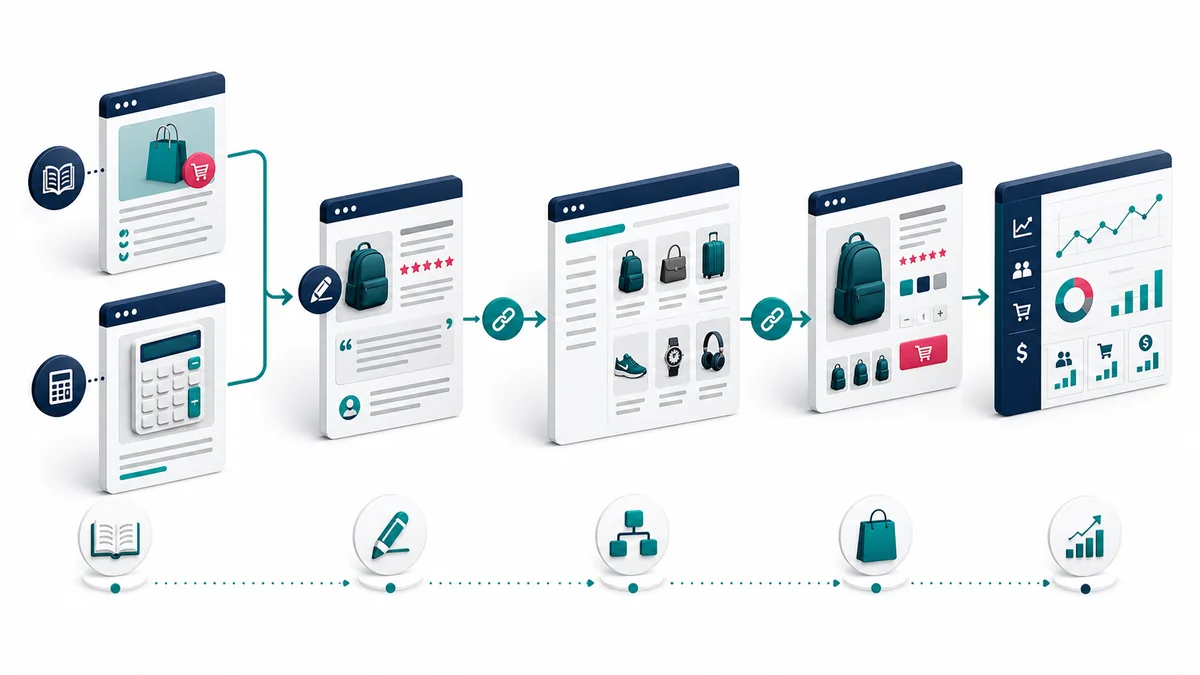
- Plan the internal route from every linkable asset to the correct category or product page.
- Measure qualified discovery, assisted revenue, and target-page movement alongside delivered links.
Product and category pages are built to help people buy. That makes them commercially important, but it rarely makes them natural reference material. Ecommerce link building works when the store creates something worth citing, earns attention from the right audience, and gives readers a sensible path from that resource to the products they came to understand.
Why Ecommerce Link Building Needs a Different Plan
A typical store may have thousands of URLs: products, collections, filters, brand pages, seasonal campaigns, buying guides, and local pages. Inventory changes. Products disappear. Faceted navigation creates near-duplicates. A link sent to the wrong URL can lose usefulness when a product is retired or a campaign page is removed.
There is also an editorial problem. A writer has a natural reason to cite a size guide, original survey, comparison method, calculator, or permanent discount page. The reason to link to a plain category grid is weaker. The practical answer is not to ignore commercial pages. It is to build a stable reference layer around them and connect that layer to the buying journey.
Ahrefs makes the same distinction in its ecommerce guidance: product and category pages are harder to attract links to, so useful informational assets often do the first job. Neil Patel’s current ecommerce link-building guide also puts digital PR, original assets, brand monitoring, and durable promotional pages at the center of the strategy. The store still needs its own priorities; a tactic is useful only when it matches the products, audience, and pages that can convert the attention.
Map Every Opportunity to the Right Store Page
| Factor | Strong evidence | Warning sign |
|---|---|---|
| Audience | The publication reaches shoppers, enthusiasts, professionals, or communities that buy or recommend the product. | The site has a high metric but no meaningful audience connection. |
| Article context | The mention helps a reader compare, choose, use, repair, or understand something. | The product or category is inserted into an unrelated article. |
| Destination | The target is the best next page and will remain useful long enough to justify the work. | A short-lived product URL receives a link that will soon break. |
| Editorial quality | The page is original, readable, maintained, indexed, and internally discoverable. | The publisher accepts any topic and surrounds the link with thin copy. |
| Commercial value | The source can send qualified visits, build preference, support search, or help future comparisons. | The campaign records only a domain metric and price. |
Run each prospect through the publisher evaluation process. Authority metrics can help with comparison, but the DA versus organic traffic guide explains why neither number proves that a particular article is a good fit.
| Opportunity | Best destination | Why it fits | Continuity check |
|---|---|---|---|
| Product roundup or test | Qualified product or comparison page | The reader is evaluating a specific solution. | Keep the URL live if stock changes and show a useful alternative. |
| How-to article | Guide, calculator, tutorial, or category education | The link answers the next practical question. | Maintain instructions and product references. |
| Trend or news coverage | Research hub, campaign page, or permanent offer page | The source needs evidence or a stable reference. | Publish method, dates, and version notes. |
| Supplier or stockist page | Brand, collection, or authorized retailer page | The link documents a real buying relationship. | Keep availability and territory information current. |
| Guest contribution | Useful guide with a natural commercial path | The article teaches before it sells. | Connect the guide to the relevant collection. |
| Local coverage | Store, event, local collection, or service-area page | The destination answers a location-specific need. | Verify address, hours, event dates, and stock information. |
Build Assets Around Real Buying Decisions
The strongest store assets remove uncertainty. They help someone choose a size, compare materials, calculate quantity, understand compatibility, plan a purchase, avoid a mistake, or interpret a trend. That usefulness gives publishers a reason to cite the page without turning their article into an advertisement.
| Asset | Question it answers | Natural link sources | Commercial path |
|---|---|---|---|
| Buying guide | Which features and tradeoffs matter? | Editors, bloggers, educators, communities, and comparison writers. | Relevant collection and carefully selected products. |
| Size, fit, or compatibility guide | Will this product work for me? | Tutorials, support resources, forums, makers, and specialist publications. | Filtered category or compatibility-ready products. |
| Calculator or selector | How much, which type, or what configuration do I need? | How-to guides, professionals, schools, and resource pages. | Products that match the result. |
| Original research | What is changing in this market? | Journalists, analysts, industry blogs, and data-led articles. | Research hub and the category behind the findings. |
| Permanent promotion page | Who qualifies and how is the offer used? | Discount directories, student resources, associations, and benefit guides. | Offer terms and eligible collections. |
| Care or repair library | How do I keep the product working? | Owners, hobbyists, sustainability content, and troubleshooting articles. | Parts, accessories, replacements, and support. |
Do not publish six weak assets because competitors have six. Start with one question that repeatedly appears in support tickets, sales calls, product reviews, site search, or customer emails. A well-maintained resource is easier to promote and more useful to the store than a large forgotten content library.
Use Digital PR and Product Data With Restraint
Retail businesses sit on stories: seasonal demand, regional preferences, price movements, repair behavior, return reasons, changing sizes, gifting patterns, or unusual product uses. The story becomes citeable when the dataset and method are understandable. Remove personal data, define the sample and period, explain exclusions, and separate what the data shows from what the brand thinks it means.
| Element | Publish | Reason |
|---|---|---|
| Question | One timely decision or change the analysis explains. | Gives the story a clear editorial angle. |
| Dataset | Source, date range, sample size, inclusion rules, and exclusions. | Lets writers judge what the numbers represent. |
| Method | Definitions, calculations, category mapping, and privacy treatment. | Makes the work auditable. |
| Limitations | Coverage gaps, product mix, geography, uncertainty, and possible bias. | Stops the headline from outrunning the evidence. |
| Media assets | Clear charts, key figures, methodology, contact, and stable URL. | Makes accurate citation easier. |
A promotion can also become news when it is genuinely useful, timely, or connected to a credible partnership. Repeating a press release for an ordinary discount is not a strategy. The test is simple: would the intended publication’s readers care if the store name were removed from the pitch?
Earn Roundup and Review Coverage With Verifiable Facts
Roundups and reviews reach shoppers close to a decision, so accuracy matters. Find pages where the product truly meets the stated criteria and is missing, outdated, unavailable, or described incorrectly. Give the editor a short evidence packet, not a demand for inclusion.
| Provide | Useful detail | Avoid |
|---|---|---|
| Fit | The exact customer, use case, and limitation. | “Best for everyone” claims. |
| Specifications | Dimensions, materials, compatibility, warranty, and current availability. | Facts copied from an old sales deck. |
| Evidence | Testing notes, certifications, source documents, and relevant customer proof. | Badges or awards without a verifiable source. |
| Media | Accurate images, demonstrations, manuals, and a stable product URL. | A folder of promotional graphics with no practical detail. |
| Editorial freedom | Permission to test, compare, correct, and describe tradeoffs honestly. | Required praise, prescribed anchor text, or a scripted conclusion. |
Monitor important reviews after publication. If a specification changes, send a concise correction with the source. If a product disappears, preserve a useful page or suggest the genuine replacement. That protects the reader and reduces link loss.
Start With Suppliers, Partners, Stockists, and Communities
Some of the best opportunities are already connected to the business. Manufacturers may maintain “where to buy” pages. Designers, installers, distributors, charities, event organizers, schools, clubs, and local groups may reference a joint resource. These links work because the relationship gives the reader a reason to follow them.
Audit the store’s real network before buying a large prospect list. Ask which brands you carry, which events you support, which experts use the products, which associations the team belongs to, and which customer questions could be answered together. Create a useful stockist page, setup guide, care resource, event page, or case study rather than asking for a naked logo link.
Use Guest Posts and Existing Articles Where the Store Has Expertise
A credible ecommerce contribution teaches from product experience: how materials behave, how buyers compare options, what installation mistakes occur, how to maintain an item, or how a market is changing. It should fit the publication’s audience even if the brand name is removed from the draft.
Use blogger outreach to find new editorial opportunities and niche edits when an established guide genuinely lacks a useful resource. In both cases, read the exact page, verify the publisher, and let the sentence determine the link. The anchor-text guide helps review the wider campaign mix without forcing one phrase into every placement.
Reclaim Existing Demand Before Creating More
Unlinked brand mentions, incorrect product citations, broken supplier links, retired campaign URLs, copied charts without attribution, and outdated “where to buy” pages are often the fastest opportunities because the editorial reason already exists. Confirm that the mention is positive and relevant, identify the best permanent destination, and send the smallest useful correction.
Then run a backlink gap analysis. Classify competitor links by why they exist: review, product test, stockist relationship, original research, guide, tool, local activity, PR story, community resource, or acquisition history. The pattern matters more than the domain list. Replicate only the opportunities for which your store can provide equal or better value.
Design the Internal Route Before Outreach
A linkable asset should not become an isolated traffic island. Add clear, useful links from the asset to the collection or product pages that answer the next question. Link back from relevant categories, product pages, and navigation modules when the resource genuinely helps shoppers. This creates a path for people as well as crawlers.
Neil Patel’s ecommerce internal-linking analysis highlights the need to balance information with the route into collections and products. For a large store, the route must also survive inventory changes. Prefer durable categories and evergreen guides, avoid linking through filtered URLs that may be blocked or duplicated, and create a replacement policy for retired products.

Video reference
See How Ahrefs Approaches Early Link Acquisition
This Ahrefs walkthrough demonstrates several practical prospecting routes. For ecommerce, adapt each route to a stable store resource and a defined shopper audience instead of chasing a round-number link total.
A 90-Day Ecommerce Link-Building Plan
| Period | Work | Decision gate |
|---|---|---|
| Days 1–15 | Choose one category cluster, audit its product lifecycle, links, content, internal routes, and conversion experience. | The priority is tied to margin, stock, audience, and a page the store can maintain. |
| Days 16–30 | Create or improve one buying asset; document facts, images, method, and ownership. | The resource solves a real question without requiring a sales pitch. |
| Days 31–45 | Build prospect groups from suppliers, reviewers, publications, communities, mentions, and competitor patterns. | Every prospect has a specific audience-fit reason. |
| Days 46–60 | Run small outreach batches, product evidence pitches, partner requests, and one editorial contribution. | The team records replies, objections, and corrections instead of sending blindly. |
| Days 61–75 | Publish, verify, add internal paths, repair weak destinations, and monitor important source pages. | Each live result passes editorial, technical, destination, and inventory QA. |
| Days 76–90 | Review qualified referrals, assisted revenue, target-page search data, mentions, link retention, and work hours. | Continue, modify, or stop each route using evidence. |
Budget for the full job, not only the publisher fee. Research, asset production, samples, shipping, writing, editing, placement review, replacements, and measurement all affect the real cost. The link-building pricing guide includes an all-in cost method for this calculation.
The EduGuestPost Ecommerce Link Route Record
This is a campaign record, not a ranking formula. Keep one row for every approved opportunity so a store owner, SEO lead, and content editor can see why the link belongs, where it should lead, and what must remain true after publication.
| Field | Record | Decision it supports |
|---|---|---|
| Store priority | Category, market, margin, stock horizon, season, and business owner. | Is this still a sensible page to support? |
| Shopper need | The question, comparison, task, or risk the source article addresses. | Does the link help the reader? |
| Publisher evidence | Audience, relevant pages, traffic context, editorial standards, country, and contact source. | Why was this publisher approved? |
| Linkable asset | Guide, tool, study, review evidence, partner resource, or permanent page. | What gives the editor a reason to cite? |
| Destination route | Source page, anchor context, asset URL, internal category, and fallback URL. | Can the route survive stock and catalog changes? |
| Delivery QA | Live URL, index check, link attributes, content accuracy, publication date, and review date. | Was the approved work delivered correctly? |
| Outcome | Qualified visits, assisted orders, target-page impressions, mentions, retained link, and learning. | Should this route be repeated, changed, or stopped? |
Common Ecommerce Link-Building Mistakes
| Mistake | Why it fails | Better move |
|---|---|---|
| Sending every link to a product | Products change and often give editors little reference value. | Use durable resources and route shoppers onward. |
| Ignoring category pages | Useful assets never support the collections that drive revenue. | Build contextual internal links into the cluster. |
| Choosing publishers by DA | The metric does not establish audience or article fit. | Review the exact publication and page opportunity. |
| Generic guest articles | The content shows no product experience and earns little trust. | Teach from real buyer questions and operator knowledge. |
| Scripted review outreach | It weakens editorial trust and can produce inaccurate coverage. | Provide verifiable facts and allow an honest verdict. |
| Disposable campaign URLs | Links break after the season or product launch. | Use stable pages with update and replacement rules. |
| No inventory check | Outreach promotes products the store cannot reliably sell. | Confirm stock horizon and fallback destination first. |
| No commercial measurement | The report shows links but not whether useful shoppers arrived. | Track delivery, search, referral, and revenue separately. |
Measure Links, Shoppers, and Revenue Separately
| Layer | Measure | Question |
|---|---|---|
| Delivery | Live pages, context, link attributes, accuracy, losses, replacements, and review status. | Did the campaign deliver what was approved? |
| Search | Target-page impressions, non-brand queries, rankings, relevant referring domains, and organic conversions. | Is the category cluster becoming easier to discover? |
| Referral | Sessions, engagement, viewed products, email signups, carts, orders, and assisted conversions. | Did the source send useful shoppers? |
| Brand | Mentions, reviews, citations, direct demand, return visitors, and comparison presence. | Is the store becoming easier to recognize and verify? |
| Economics | All-in cost, staff hours, product samples, gross profit influenced, and retained value. | Was this route worth repeating? |
Do not attribute every ranking or sale to one backlink. Promotions, seasonality, stock, price, technical changes, content updates, and brand demand move at the same time. Use annotations and comparison periods, then treat the result as campaign evidence rather than certainty.
The Practical Takeaway for Online Stores
Ecommerce link building is not a contest to point the most links at the product catalog. It is a distribution system for the store’s most useful knowledge, evidence, and relationships. Build one durable asset around a real buying decision, promote it to people who serve that audience, and connect it to the right commercial pages.
Start with one category that has stable stock and a clear business owner. Use the route record, verify every publisher, and follow the safe link-building strategy for campaign sequencing. Once the store can explain which sources sent useful shoppers and which assets supported sales, scale the routes that earned that confidence.
FAQs About Ecommerce Link Building
What is ecommerce link building?
It is the work of earning relevant external references to an online store through useful content, product expertise, reviews, data, partnerships, PR, communities, and editorial outreach, then connecting those references to the buying journey.
Should backlinks point directly to product pages?
Sometimes, especially from a genuine product review or roundup. For broader outreach, a stable buying guide, tool, research page, or category resource often gives the editor and reader a stronger reason to link.
How can category pages benefit from links?
Earn links to relevant resources and add useful internal paths into the category. Direct category links can also make sense when the source is explicitly helping readers find or compare that product group.
Which ecommerce assets attract links?
Buying guides, size and compatibility resources, calculators, original data, permanent offers, repair libraries, comparison methods, and product evidence can all attract references when they solve a specific problem.
Are product reviews useful for link building?
Yes, when the product fits the review, facts are current, and the reviewer remains free to test and describe tradeoffs honestly. The resulting page can support qualified referral traffic as well as discovery.
How do suppliers create link opportunities?
Manufacturers and distributors may maintain stockist, partner, setup, or authorized retailer pages. Give them accurate relationship information and a stable destination that helps their customers.
Should an ecommerce store use guest posting?
Guest posting can work when the store contributes real product or buyer expertise to a relevant audience. Avoid generic articles and publishers chosen only by authority metrics.
How many links does an ecommerce category need?
There is no universal number. Compare the category and its supporting content with relevant competitors, then work within the quality opportunities the store can maintain. The backlink-needs guide explains the comparison.
How should stores handle links to discontinued products?
Preserve a useful page when it still serves readers, offer a clearly marked replacement, or redirect only when the intent and product relationship are genuinely equivalent. Avoid sending visitors to an unrelated category.
How long should the first ecommerce campaign run?
A 90-day cycle is long enough to research one cluster, build an asset, test several prospect groups, publish, verify, and learn. It is an operating period, not a promise that rankings or revenue will change within 90 days.
Research Behind This Ecommerce Strategy
These resources informed the product and category distinction, buying assets, reviews, permanent campaign pages, internal routes, and current search and AI-discovery context.
- Ahrefs: ecommerce product feedback, article updates, mentions, stockists, and statistics pages
- Ahrefs: technical, content, and link-building foundations for ecommerce sites
- Semrush: ecommerce marketing for search and AI discovery in 2026
- Neil Patel: digital PR, linkable assets, permanent offers, and brand monitoring
- Neil Patel: internal linking routes for ecommerce collections and products
Build an Ecommerce Publisher and Asset Plan
Send the priority categories, products, markets, stock horizon, existing buying resources, and campaign capacity. We will map useful content angles and return reviewed publisher routes for the parts that need editorial outreach.